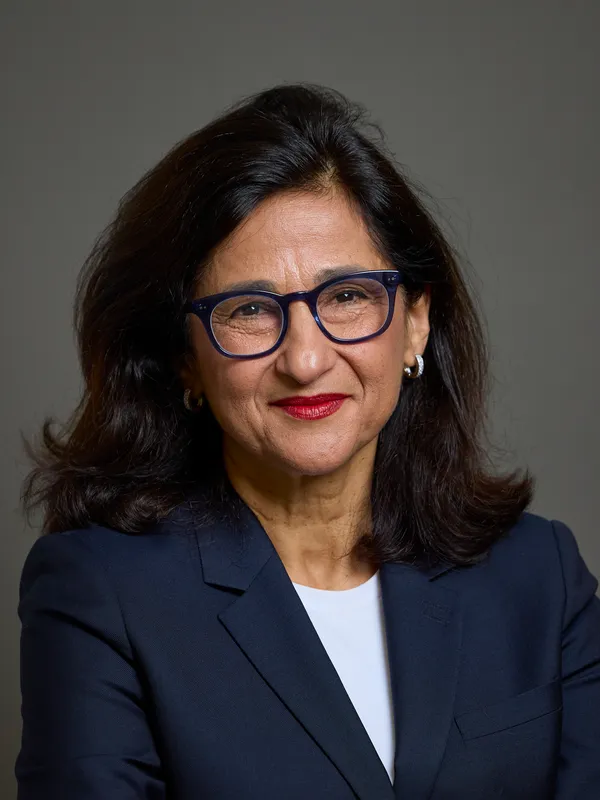
Minouche Shafik
Economist & academic leader
Minouche Shafik is an economist and academic leader who has held senior positions across international finance, central banking, and higher education. Over her career she has served in leadership roles at the World Bank, the International Monetary Fund, the Bank of England, and as the head of two major universities.
Early life
Nemat Talaat Shafik, known as Minouche Shafik, was born on August 13, 1962, in Alexandria, Egypt. Her family later moved to the United States. She pursued economics in her higher education, earning degrees from the University of Massachusetts Amherst, the London School of Economics, and a doctorate from the University of Oxford. Her academic training laid the foundation for a career spanning development economics and public policy.
Career
Shafik began her career at the World Bank, where she rose rapidly through the ranks and became one of its youngest vice presidents, focusing on development economics and infrastructure issues. She later served as Permanent Secretary of the United Kingdom's Department for International Development, leading the country's overseas aid programs and budget. She subsequently became a Deputy Managing Director of the International Monetary Fund, where she worked on the institution's response to global economic challenges, including financial crises and lending to member countries. Across these roles she became known as a leading practitioner of international economic policy who moved fluidly between multilateral institutions and national government.
In 2014 Shafik was appointed a Deputy Governor of the Bank of England, with responsibility for markets and banking, serving on the bank's policy committees. Her work in central banking added to a profile that combined international institutions with national economic policymaking. She was later appointed to the House of Lords as a life peer.
Recent work
Shafik became Director of the London School of Economics and Political Science in 2017, leading the institution for several years and writing on the social contract in her book What We Owe Each Other. In 2023 she became president of Columbia University in New York, the first woman to hold the post on a permanent basis. Her tenure there coincided with a period of significant campus protests, and she resigned in 2024. An influential figure in economic policy and academic administration, Shafik has continued to contribute to public debates on global development, economic governance, inequality, and the changing role of universities in society. Her career, spanning leading roles across multilateral institutions, central banking, government, and higher education on both sides of the Atlantic, has made her one of the more widely recognized economists of her generation.
Videos




FAQ
Minouche Shafik — Frequently asked questions
How old is Minouche Shafik?+
Minouche Shafik was born on August 13, 1962, which makes 64 years old.
Where is Minouche Shafik from?+
Minouche Shafik is a citizen of United Kingdom and Egypt.
What is Minouche Shafik known for?+
Minouche Shafik is best known as Economist. Notable work includes Director of LSE, Bank of England deputy governor, president of Columbia University.