Business
JPMorgan Reshuffle Narrows Race to Succeed Jamie Dimon
JPMorgan elevated Doug Petno and Troy Rohrbaugh to co-presidents and confirmed Marianne Lake's retirement, sharpening the long-running contest to one day replace CEO Jamie Dimon.
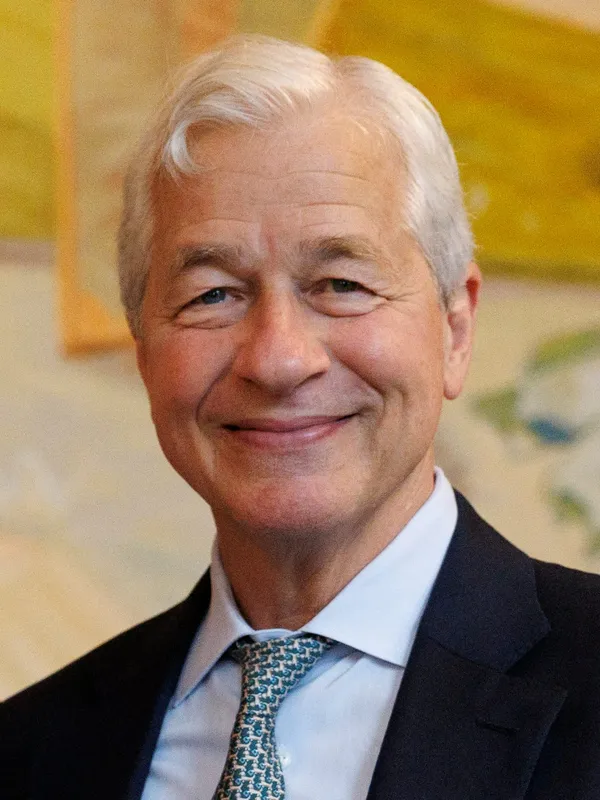
Chairman and CEO of JPMorgan Chase
James "Jamie" Dimon is an American banker and business executive who serves as chairman and chief executive officer of JPMorgan Chase, one of the largest financial institutions in the world. He is widely regarded as one of the most influential figures in global banking and has led the company through periods of both growth and crisis.
Dimon was born in New York City in 1956 into a family with roots in the financial industry; his father and grandfather both worked as stockbrokers. He studied at Tufts University and later earned a master's degree in business administration from Harvard Business School. Early in his career he worked closely with the financier Sanford "Sandy" Weill, a partnership that would shape much of his professional path.
Dimon worked alongside Weill at American Express and then at a series of financial firms that grew through acquisitions, eventually contributing to the creation of Citigroup. He held senior roles during this period and gained a reputation as a capable operator focused on costs, risk and the integration of merged businesses. His association with Weill ended in the late 1990s, after which Dimon took on new leadership opportunities.
In 2000 Dimon became chief executive of Bank One, a large Midwestern bank, where he worked to strengthen the company's finances and operations. When Bank One merged with JPMorgan Chase in 2004, Dimon joined the combined company in a senior position and subsequently became its chief executive in 2005, adding the role of chairman thereafter.
Under his leadership, JPMorgan Chase expanded across consumer banking, investment banking, asset management and other business lines. Dimon became especially well known for steering the bank through the financial crisis of 2007 to 2009. During that turbulent period, JPMorgan acquired the investment bank Bear Stearns and the banking operations of Washington Mutual, transactions that significantly expanded the firm. The bank emerged from the crisis in a relatively strong position compared with many competitors, which enhanced Dimon's standing in the industry.
His tenure has not been without challenges. The bank faced a major trading loss in 2012, often referred to as the "London Whale" episode, as well as various regulatory matters over the years. Dimon has remained at the helm through these events and has continued to be a prominent commentator on economic and financial issues.
Beyond running JPMorgan Chase, Dimon is known for his annual letters to shareholders, which are widely read for his views on the economy, banking regulation, technology and public policy. He has spoken on a broad range of topics, including financial markets, the role of large banks, and broader social and economic questions, and his comments often attract significant media attention.
Dimon has served in industry and advisory roles and has been mentioned over the years in discussions about leadership in both the private and public sectors. He has generally emphasized themes such as long-term investment, prudent risk management and the importance of a stable financial system.
Dimon experienced a serious health scare when he underwent emergency heart surgery, after which he returned to his duties. As one of the longest-serving chief executives among major banks, he is frequently cited as a leading voice in finance, and questions about succession at JPMorgan Chase have become a recurring topic of interest among investors and observers of the industry.
JPMorgan elevated Doug Petno and Troy Rohrbaugh to co-presidents and confirmed Marianne Lake's retirement, sharpening the long-running contest to one day replace CEO Jamie Dimon.
FAQ
Jamie Dimon was born on March 13, 1956, which makes 70 years old.
Jamie Dimon is from United States.
Jamie Dimon is best known as Banker. Notable work includes Leading JPMorgan Chase, navigating the 2008 financial crisis, influential voice in banking and finance.