Why Keanu Reeves' Dracula Performance Is More Interesting Than You Think

Keanu Reeves is widely considered the weak link in Coppola's Bram Stoker's Dracula — but a closer look reveals his miscasting tells a richer story.
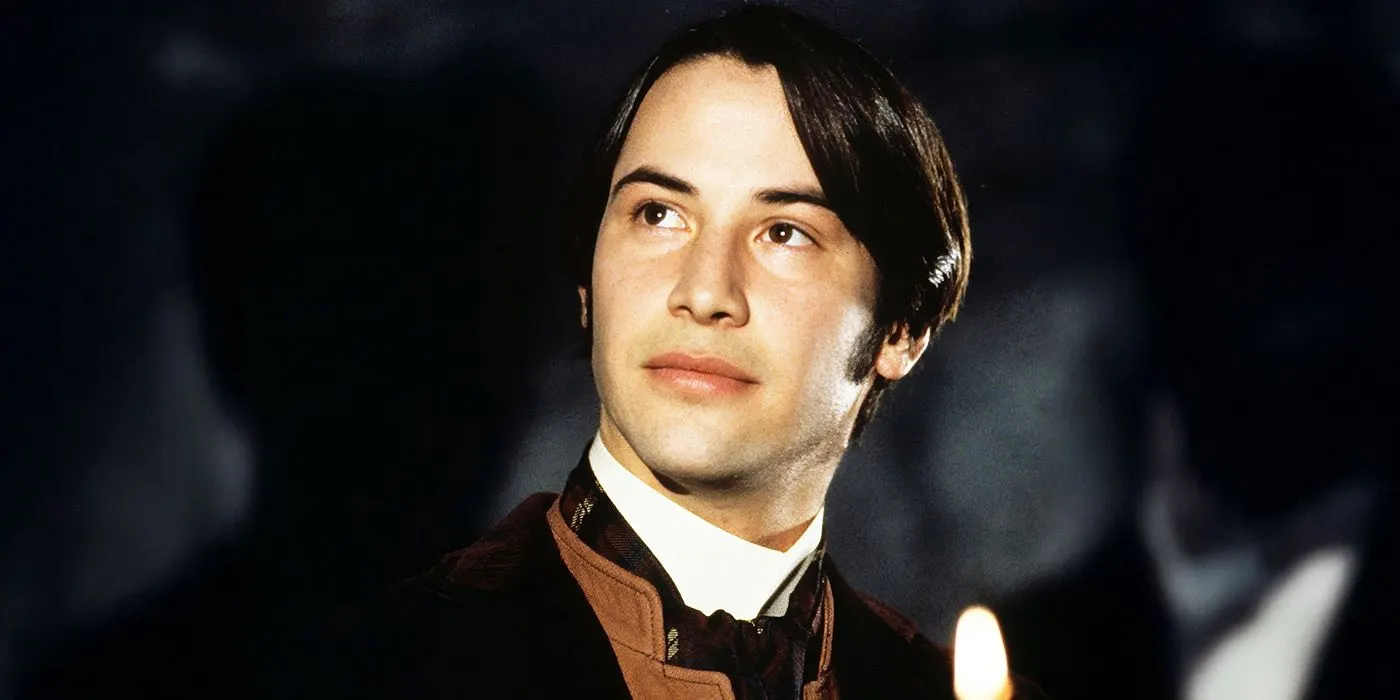
Few performances in prestige Hollywood horror are as reflexively dismissed as Keanu Reeves' turn as Jonathan Harker in Francis Ford Coppola's 1992 gothic epic Bram Stoker's Dracula. The mockery has become so entrenched in film discourse that it tends to overshadow the movie's genuine visual grandeur — yet, according to a reassessment published by Collider, that consensus may be more reductive than the performance itself.
The Problem With Jonathan Harker as a Character
Before relitigating Reeves specifically, it's worth acknowledging something the conversation rarely does: Jonathan Harker is one of literature's most structurally thankless protagonists. Across virtually every major screen adaptation of Bram Stoker's novel — from the Bela Lugosi-era Universal pictures through to Robert Eggers' recent Nosferatu, in which Nicholas Hoult plays the equivalent role with considerable skill — Harker functions primarily as a plot engine rather than a fully drawn human being. He is dutiful, earnest, and thoroughly British, and next to the volcanic magnetism of Dracula himself, those qualities consistently render him the dullest figure in the room. The character's dramatic limitations are a textual problem, not an actor problem.
How Reeves Ended Up in the Role
The casting itself arrived under complicated circumstances. Coppola's original preference for the role was Johnny Depp, whose chameleonic instincts would likely have served the period material well. The studio, however, pushed for someone carrying greater marquee weight, and Reeves — fresh off the commercial momentum of Point Break — fit that commercial brief. What the studio calculus didn't account for was the toll of Reeves' schedule: he had moved through Point Break, Bill and Ted's Bogus Journey, and My Own Private Idaho in rapid succession before Dracula began production, and arrived on set genuinely depleted.
Coppola, speaking to Entertainment Weekly in 2015, was candid about what went wrong with the accent specifically. The director noted that Reeves' impulse to execute the British inflection with meticulous precision was precisely what undermined it — the effort showed, producing a stiffness that a looser, less fastidious approach might have avoided. Coppola also acknowledged that his personal affection for Reeves may have softened his directorial hand when firmer guidance was needed.
The Accidental Virtue of Being Memorably Out of His Depth
Here is where the reassessment becomes genuinely interesting. Most screen Harkers are competent, composed, and entirely forgettable — adequate vessels for the plot who dissolve from memory the moment Dracula fills the frame. Reeves' version, by contrast, is impossible to forget, and not purely for the reasons critics have weaponised. The visible strain in his performance — the sense of a man slightly overwhelmed by both his material and his scene partners — inadvertently produces something the character arguably needs: authentic vulnerability. Surrounded by Gary Oldman's ferociously committed Dracula, Anthony Hopkins' scene-stealing Van Helsing, and Cary Elwes delivering assured period work, Reeves reads as a young man genuinely out of his depth against forces he cannot comprehend. That is, structurally speaking, exactly what Jonathan Harker is.
It's also worth remembering that Reeves is capable of real screen presence when the role aligns with his strengths. His work in A Scanner Darkly remains one of the most underappreciated performances of his career, and there are strong indications he continues to seek out unconventional projects — including reported talks to lead Universal's live-action Lego film. His range is real, even if Dracula caught him at the wrong moment for the wrong part.
A Performance Worth Recontextualising
None of this is an argument that Reeves delivered a good performance in Bram Stoker's Dracula. He didn't, and the film's admirers have always known it. But there is a meaningful distinction between a performance that is bad and forgettable and one that is bad and somehow still functioning — still contributing a texture that the film, whether by accident or strange design, actually uses. By the low bar of making Jonathan Harker register as a distinct human presence rather than a narrative placeholder, Reeves clears it in a way that most of his predecessors quietly did not.
Related on Ni4o: Keanu Reeves in Talks to Lead Universal's New Live-Action Lego Movie
 ProfileKeanu ReevesActor and Musician
Related
Randy Quaid Slams Anne Hathaway Casting in Days of Thunder Sequel
Randy Quaid, who appeared in the original 1990 film, took to X to demand Nicole Kidman's return and dismiss the Hathaway announcement.

Eva Mendes' 'de Gosling' Tattoo Is the Only One She's Ever Wanted
Eva Mendes is showing off her wrist tattoo again — a small but meaningful piece of ink that carries a deep cultural significance.
Steven Spielberg's 'War of the Worlds' Returns to Streaming Amid Debate
Steven Spielberg's 'War of the Worlds' is hitting HBO Max next month, reigniting discussions on its mixed reception.