Why Catch Me If You Can Is One of Spielberg's Finest Films

Overlooked beside Jaws and Schindler's List, Spielberg's 2002 crime caper is a masterclass in tone, craft, and performance.
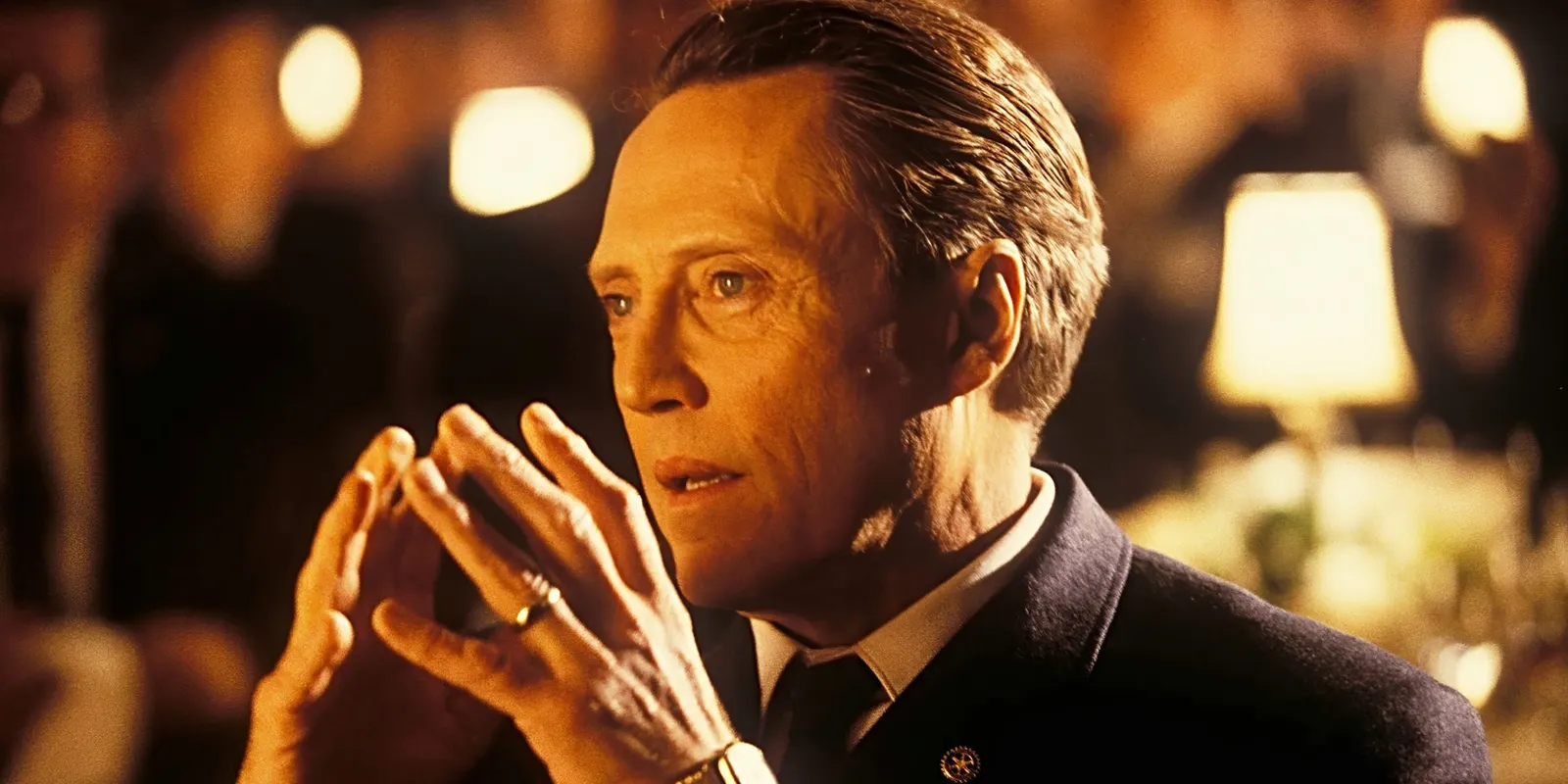
When debating the greatest films in Steven Spielberg's canon, the conversation tends to orbit the same handful of titles — Jaws, Schindler's List, E.T., Saving Private Ryan. Each deserves its place in the argument. But occasionally a film sits just outside that charmed circle, not because it lacks the quality, but simply because the competition is so formidable. Catch Me If You Can, released in 2002, is precisely that kind of overlooked masterwork — a film that rewards closer attention at every level of its construction.
A Caper Film Rooted in a Tradition
According to Collider, the film draws its lineage from the elegant cat-and-mouse caper pictures of the 1960s — titles like The Thomas Crown Affair and The Italian Job — and Spielberg honors that heritage with genuine cinephile affection. The movie is set against a lovingly rendered mid-century backdrop, and its very first frames announce its intentions through a sophisticated animated opening-credit sequence that evokes the graphic design tradition of Saul Bass, whose work shaped the visual identity of films from Hitchcock's Vertigo to Preminger's Anatomy of a Murder. It is a deliberate, knowing gesture, signaling that the film understands exactly what genre it is operating within.
John Williams, Spielberg's longtime collaborator, departs from his customary sweeping orchestral palette in favor of something nimble and jazz-inflected — a score that breathes with the same loose, improvisational energy that defines Frank Abagnale Jr.'s lifestyle on screen.
DiCaprio and Hanks: A Study in Contrasts
The film's central tension belongs entirely to Leonardo DiCaprio and Tom Hanks, and the casting itself feels like an act of directorial intelligence. DiCaprio plays Abagnale, who claimed in his semi-autobiographical book to have impersonated a Pan Am pilot, a Georgia physician, and a Louisiana attorney — all before his nineteenth birthday. Whether the real Abagnale embellished those exploits remains disputed; Abagnale himself has suggested the film is roughly 80 percent accurate, though that figure has faced scrutiny. What matters cinematically is that DiCaprio makes every audacious claim feel not just plausible but inevitable. His charm operates as a kind of gravity.
Handling the more structurally challenging role is Hanks as FBI agent Carl Hanratty. Where DiCaprio commands the foreground, Hanks exercises the discipline of restraint — appearing foolish without ever being a fool, and tracing a quiet arc from obsessive pursuer to something resembling a reluctant surrogate father. It is the kind of performance that tends not to collect awards precisely because it is so carefully calibrated to serve the whole rather than demand individual attention.
Spielberg's Recurring Themes at Full Strength
Under the genre machinery runs a current that is unmistakably Spielbergian. The director has returned throughout his career to questions of family rupture, the passage from adolescence to responsibility, and the search for belonging — themes as present here as they are in War of the Worlds or, in a different register, in some of his lesser-known television work. Frank's con artistry is inseparable from the collapse of his parents' marriage; his crimes are, in a real sense, a prolonged refusal to accept that the family he knew is gone. Christopher Walken, as Frank Abagnale Sr., grounds that emotional core in a single extended scene that gives the entire film its moral weight.
A Masterpiece That Earns Reappraisal
Every technical element of Catch Me If You Can — production design, cinematography, score, editing rhythm — coheres into something seamless. Spielberg never reaches for easy danger or manufactured stakes; the film generates tension through wit and timing rather than violence or melodrama. That confidence in the audience's patience is itself a form of artistry.
For a filmmaker whose body of work is as densely decorated as Spielberg's — one that continues to draw attention whether he's sharing a screening room with Martin Scorsese or sparking debate with a returning catalog title — it says something that Catch Me If You Can still manages to slip under the radar. Revisit it, and the film's obscurity starts to feel, as one critic aptly noted, more than a little criminal.
 ProfileLeonardo DiCaprioOscar-winning actor and environmental advocate
Related

Randy Quaid Slams Anne Hathaway Casting in Days of Thunder Sequel
Randy Quaid, who appeared in the original 1990 film, took to X to demand Nicole Kidman's return and dismiss the Hathaway announcement.

Eva Mendes' 'de Gosling' Tattoo Is the Only One She's Ever Wanted
Eva Mendes is showing off her wrist tattoo again — a small but meaningful piece of ink that carries a deep cultural significance.
Steven Spielberg's 'War of the Worlds' Returns to Streaming Amid Debate
Steven Spielberg's 'War of the Worlds' is hitting HBO Max next month, reigniting discussions on its mixed reception.