Why Bloodsport Is Jean-Claude Van Damme's Most Important Film

The 1988 martial-arts classic that launched Van Damme's career is now streaming free — and it holds up better than most of its successors.
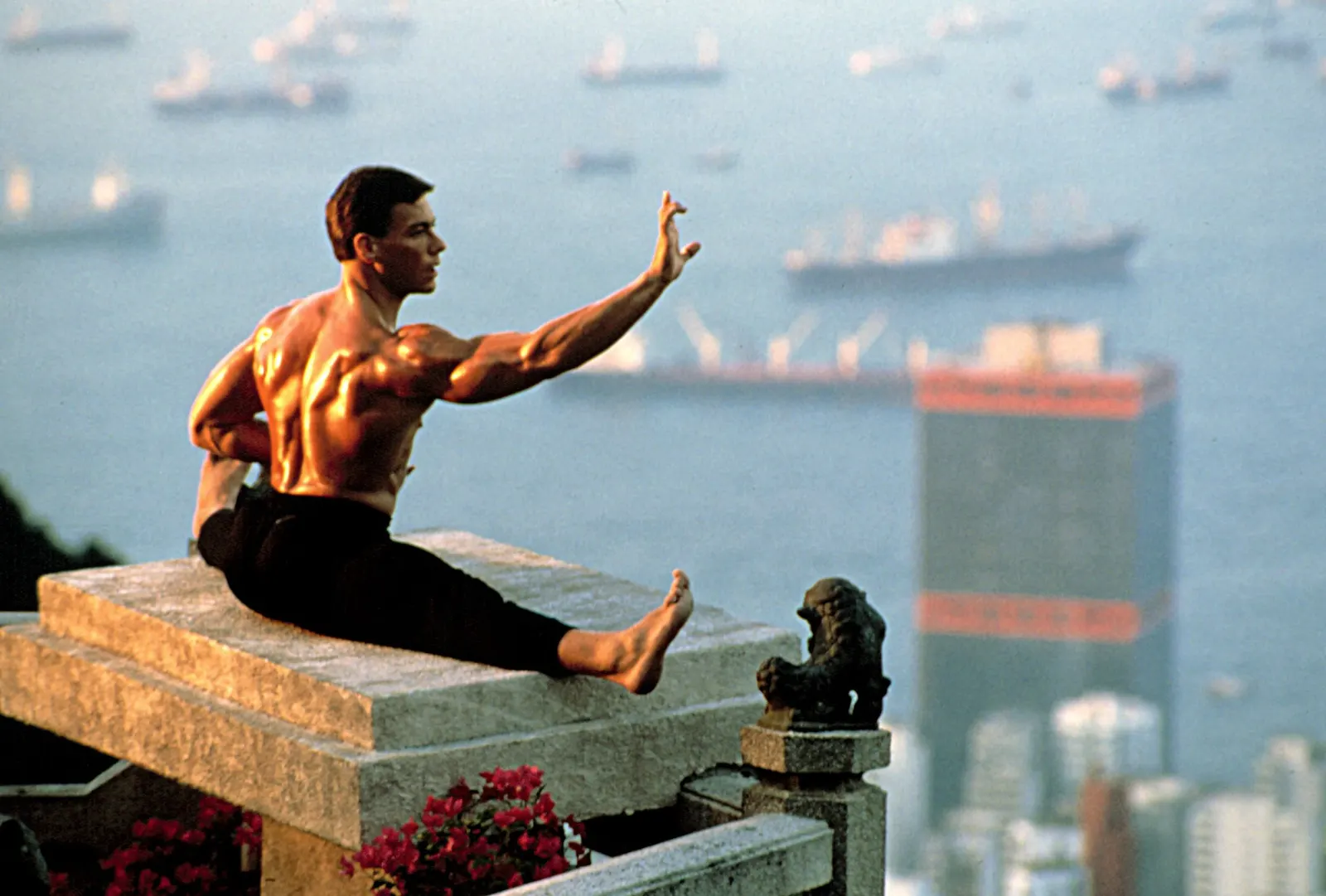
There is a persistent critical blind spot when it comes to Jean-Claude Van Damme, one that has followed him since the late 1980s and has never fully been corrected. Lumped in with the stoic, invincible archetypes personified by contemporaries like Steven Seagal and Chuck Norris, Van Damme has long been shortchanged by a cultural conversation that refused to look closely enough at what actually made him compelling on screen. The 1988 tournament fighter Bloodsport — now available to stream for free with ads on YouTube — is the ideal place to start reconsidering that verdict.
The Case for Van Damme as a Different Kind of Action Hero
What separates Van Damme from his era's equivalents is, counterintuitively, vulnerability. Where Seagal and Norris built careers on characters who functioned less like human beings and more like forces of nature — rarely wounded, never truly threatened — Van Damme consistently played men who could lose. Across films like Cyborg, Kickboxer, and Timecop, his characters absorb punishment, commit errors of judgment, and carry genuine emotional weight. That fallibility makes the audience's investment real. Even when his performances strain under the burden of working in a second language, the peril feels credible in a way that his peers rarely achieved. It's a distinction that matters enormously to the experience of watching action cinema, and Bloodsport is where that approach was first fully articulated.
A Story Stranger Than the Film Itself
The screenplay draws from a 1980 Black Belt magazine article by John Stewart, built around American martial artist Frank Dux's account of winning an underground fighting tournament called the Kumite in Nassau in 1975. Dux, who also served as fight choreographer on the film, is a figure whose biographical claims have since been comprehensively disputed — the Kumite tournament, his covert CIA missions, and his alleged Medal of Honor have all been characterized as fiction by those in a position to know. According to Polygon, who revisited the film's legacy, most of Dux's story is an elaborate fabrication. The irony is that the tall tale produced something genuinely durable: a lean, propulsive action film that has outlasted the credibility of its source.
What Bloodsport Actually Gets Right
In the film, Van Damme's Dux goes AWOL from the U.S. Army to compete in the Kumite, an underground martial-arts competition held in Hong Kong that draws fighters representing disciplines from around the world — capoeira, sumo, street brawling, and more. The reigning champion is the formidable Chong Li, played with genuine menace by Bolo Yeung, a veteran of numerous Shaw Brothers productions. A young Forest Whitaker appears as one of the military police pursuing Dux, a small role that adds unexpected texture to the film's margins.
What director Newt Arnold understood intuitively — and what distinguishes Bloodsport from the bloated action films that surrounded it — is the value of clarity of purpose. There is no criminal conspiracy powering the tournament, no elaborate subplot demanding resolution. Dux is there to fight, and fight he does, match after match in a film that functions as its own highlight reel, each bout distinct in style and tempo. For audiences accustomed to the over-engineered plotting of modern blockbusters, that directness feels almost radical. Much as Sandra Bullock's return in Practical Magic 2 reminds us what focused genre filmmaking can accomplish, Bloodsport demonstrates that a well-executed premise rarely needs embellishment.
A Wider Cultural Footprint Than It Gets Credit For
The film's influence has been quietly enormous. Bloodsport is widely acknowledged as a foundational inspiration for the project that eventually became the original Mortal Kombat, and its fingerprints are visible across Street Fighter II's design philosophy — putting radically diverse fighting styles into direct competition and letting the spectacle speak for itself. The argument that Bloodsport's success helped establish the one-on-one fighting game as a genre is not a stretch; it is a reasonable reading of the historical record. Just as streaming has renewed interest in Gal Gadot's In the Hand of Dante on Netflix and surfaced overlooked genre work for new audiences, Van Damme's breakthrough is finding fresh eyes nearly four decades after its release.
Still Worth 92 Minutes of Your Time
Bloodsport is not a flawless film — its pacing occasionally staggers, and certain performances exist firmly within the conventions of late-'80s B-cinema. But as a document of Van Damme's particular gifts and as a cornerstone of martial-arts filmmaking in the West, it remains essential viewing. Its free availability removes every remaining barrier. If you have ever appreciated the genre it helped create, there is no reason left to put it off.
Related on Ni4o: Hugh Jackman's 'The Sheep Detectives' Becomes a Prime Video Hit
 ProfileJean-Claude Van DammeActor & martial artist
Related
Randy Quaid Slams Anne Hathaway Casting in Days of Thunder Sequel
Randy Quaid, who appeared in the original 1990 film, took to X to demand Nicole Kidman's return and dismiss the Hathaway announcement.

Eva Mendes' 'de Gosling' Tattoo Is the Only One She's Ever Wanted
Eva Mendes is showing off her wrist tattoo again — a small but meaningful piece of ink that carries a deep cultural significance.
Steven Spielberg's 'War of the Worlds' Returns to Streaming Amid Debate
Steven Spielberg's 'War of the Worlds' is hitting HBO Max next month, reigniting discussions on its mixed reception.