Trump Dismisses Iran's Hormuz Closure Claim as Ceasefire Crumbles

President Trump says US forces are keeping the Strait of Hormuz open by force after Iran declared it closed, pushing a fragile ceasefire to the brink.
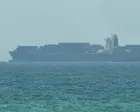
A month-old ceasefire between the United States and Iran is teetering on collapse after nearly a week of escalating military exchanges centered on the Strait of Hormuz, the critical waterway through which a significant share of the world's oil supply flows. President Trump, speaking publicly on Sunday, flatly rejected Iran's assertion that the strait had been sealed off.
Trump: 'Traffic Is Flowing'
Appearing on NBC's Meet the Press, Trump said US forces had compelled the waterway to remain open through direct military action. "It's open. We bombed the hell out of them last night," he said, describing Iran's leadership in starkly negative terms. He also claimed that Iranian representatives had agreed to a comprehensive deal on Saturday — one that he characterized as covering nuclear issues and broader security concerns — only to launch a drone strike against a commercial vessel within the hour. Iran made no reference to any such talks, and the White House offered no supporting documentation for Trump's account.
US Central Command (Centcom) confirmed that traffic was moving through the strait, though the US-run Joint Maritime Information Center described volume as operating at "reduced levels."
A Week of Tit-for-Tat Strikes
The current flare-up began Monday when Iran attacked three commercial vessels traveling along a southern route near the Omani coastline, a corridor Tehran said it had not authorized. The US responded with missile strikes, setting off a cycle of retaliatory actions that has now stretched across nearly seven days, according to reporting by The Guardian World.
On Saturday night and into Sunday morning, Centcom announced it had struck 140 Iranian military targets — including missile and drone installations, naval facilities, ammunition depots, communications infrastructure, and surveillance positions — in response to Iran disabling the Cypriot-flagged container ship GFS Galaxy. The vessel was struck while transiting the strait, its crew forced into lifeboats. India's government confirmed that ten of its nationals from the ship were rescued, while one remained unaccounted for.
Iran's Islamic Revolutionary Guard Corps (IRGC) countered with drone and missile strikes reported across multiple US-aligned Gulf states, including the UAE, Qatar, Jordan, Bahrain, and Oman. The IRGC claimed to have destroyed logistical and refueling facilities at the port of Duqm in Oman — an attack that drew a swift condemnation from Muscat, which had hosted Iranian delegates for security talks just hours earlier.
The Ceasefire Agreement and Its Erosion
The violence puts severe strain on a memorandum of understanding signed on June 17, which extended a ceasefire by 60 days to allow trade through the strait to resume and to create space for negotiations on Iran's nuclear program and sanctions relief. Those substantive talks have largely failed to materialize. Fighting between Israel and Hezbollah in Lebanon — also nominally covered by the agreement — has continued as well.
Iran's position is that any durable regional settlement must formally recognize its authority over the strait, which it seized following a US-Israeli strike on Iranian territory in February. Senior adviser Mohsen Rezaee, speaking to Iranian state media, framed control of the waterway in existential terms: "This strategic passage is more important than dozens of atomic bombs."
The IRGC declared the strait would remain closed until the United States ends what it described as interference in the region, and threatened to expand strikes against additional targets if US military action continued.
Markets Rattled but Not Panicked
Global markets have registered the renewed instability, though Brent crude was trading near $75 per barrel heading into the weekend — well below wartime peaks above $120 a barrel and close to pre-conflict averages. Analysts suggested the relatively measured price response reflects a market calculation that neither Washington nor Tehran wants a return to full-scale war, even as both sides continue to trade blows.
The episode underscores the broader volatility of Trump's foreign policy posture at a moment when his administration is simultaneously managing friction on multiple international fronts. As Trump navigates tensions with European allies and presses economic pressure on trading partners through measures like proposed tariffs on EU digital services, the Hormuz standoff represents the most kinetic test yet of whether his administration can contain a conflict it helped shape.
Related on Ni4o: Trump Stalls Bipartisan Housing Bill Over SAVE Act
 ProfileDonald Trump45th and 47th President of the United States
Related
California Senate Passes Post-Production Tax Bill; Newsom Must Act
SB 2319 cleared the California State Senate 33-5, creating a dedicated post-production tax incentive as the L.A. film industry continues to shrink.

Netanyahu Condemns West Bank Attack on NBC News Team as Settler Violence Escalates
Masked settlers assaulted an NBC News crew and a Palestinian woman in Jalud, injuring four journalists and drawing condemnation from Israel's prime minister.
Park Service Backs Trump Arch Despite Threat to DC Landmark Sightlines
A federal report endorses the proposed 250-foot gilded arch while acknowledging it will disrupt the visual integrity of dozens of historic Washington sites.