Paul Rudd Ditched His Phone on Set — and Has Thoughts on Why

The actor opens up about digital addiction and his role in Tom McCarthy's climate drama 'A Statement,' a film with serious cinematic ambitions.
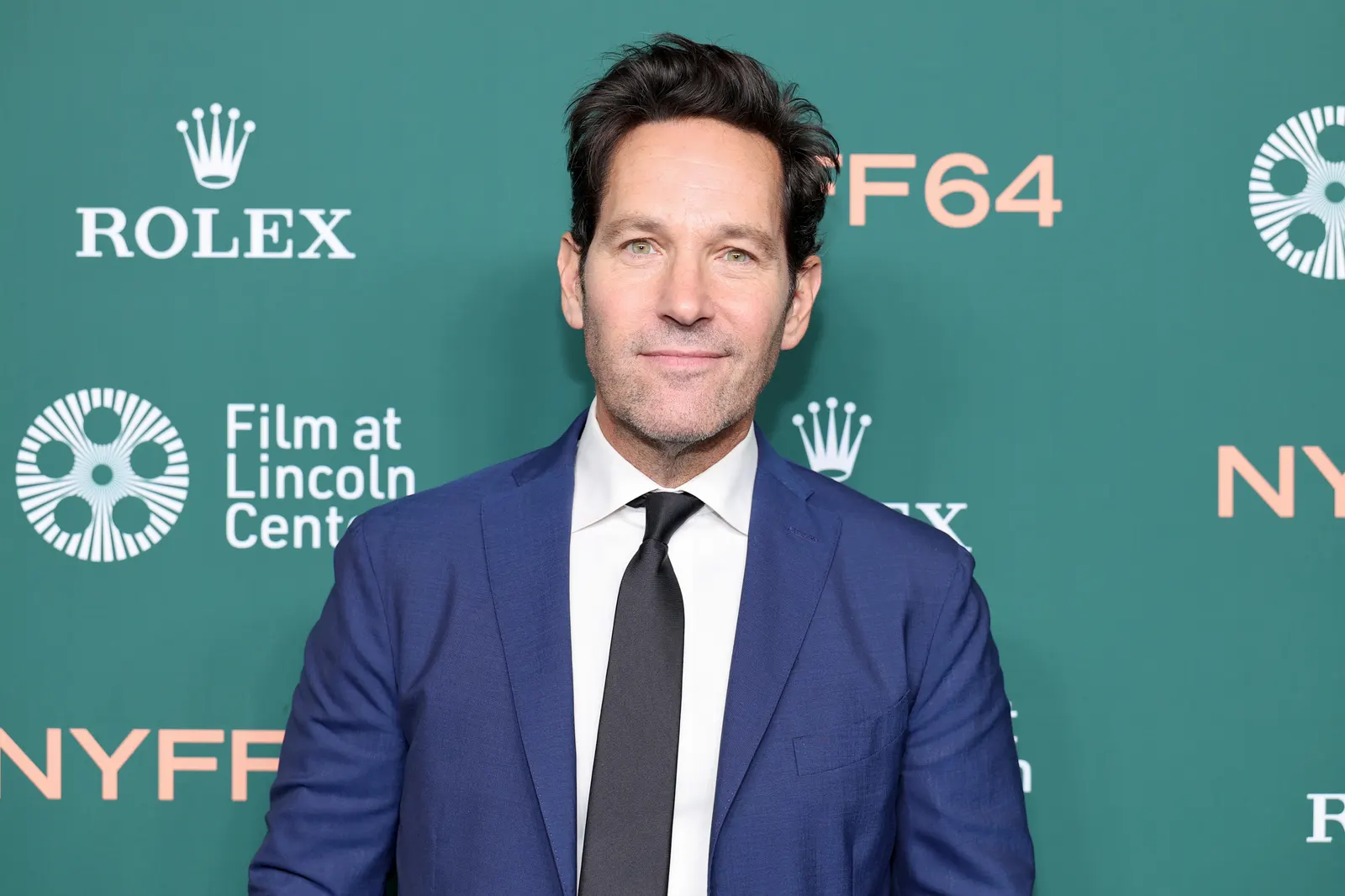
Paul Rudd is not the kind of actor who coasts on charm alone, even when that charm is considerable. His latest project makes that clear — and so does a candid admission about a habit he's had to actively break.
A Deliberate Choice to Disconnect
In a revealing interview reported by Variety, Rudd disclosed that he has made a point of leaving his phone behind when he arrives on a film set. The reasoning, he explained, is straightforward self-awareness: he considers himself just as susceptible to the pull of the device as anyone else. More pointedly, he described smartphones as instruments that are "facilitating our own destruction" — a phrase that carries more than a little irony given the subject matter of his new film. For an actor now synonymous with playing thoughtful, grounded characters, the decision reads less like a wellness trend and more like a considered professional discipline, a way of staying present in an industry that increasingly competes with the infinite scroll for human attention.
The Film That Frames the Conversation
Paul Rudd anchors Tom McCarthy's climate drama A Statement as the moderator of a fictional 1980 conference — the first of its kind, as the story has it — convened to address America's emerging climate crisis. The setting is a Florida beachside resort, and the dramatic architecture is deliberately constrained: twenty experts, one conference room, one weekend. The structural echo of Sidney Lumet's 12 Angry Men is not incidental. McCarthy, who won an Oscar for Spotlight, appears to be working once again in the tradition of ensemble chamber drama, where the pressure of a closed space forces character and argument into sharp relief.
That Rudd occupies the moderator's chair is a casting choice worth examining. Moderators are, by nature, figures who must project authority while remaining formally neutral — a tension that suits Rudd's particular gift for suggesting intelligence beneath an affable surface. It is a role that asks for restraint rather than spectacle, and restraint is something Rudd has demonstrated across a remarkably varied career.
McCarthy's Continued Ambition
Tom McCarthy has earned a reputation as one of contemporary American cinema's more serious-minded directors, someone unafraid to take on institutional or societal subjects and treat them with genuine rigor. A Statement appears to continue in that vein, using the hindsight of more than four decades to examine a moment when the trajectory of the climate conversation might have bent differently. Setting the film in 1980 is a pointed choice — a year of political transition in the United States, and a period when the scientific consensus on climate change was already forming, even if the political will to act was not.
For audiences drawn to the kind of intelligent, dialogue-driven filmmaking that has found renewed energy on streaming platforms — Hugh Jackman's The Sheep Detectives recently demonstrated that character-driven ensemble work can thrive in that space — A Statement seems positioned as a worthy entry in that tradition.
Craft, Attention, and the Larger Picture
Rudd's comments about phone use connect, perhaps unexpectedly, to the themes of his new film. A movie about experts gathered to address a long-term civilizational problem, who may or may not succeed in cutting through distraction and short-term thinking, finds a quiet resonance in an actor's decision to simply put the device down. Whether that parallel is intentional or accidental, it gives his remarks a texture that goes beyond the usual celebrity wellness anecdote.
As the promotional cycle for A Statement continues, it will be worth watching how McCarthy and Rudd frame the film's relevance to contemporary audiences. The 1980 setting provides historical distance, but the subject ensures that distance collapses quickly.
Related on Ni4o: Paul Rudd Anchors Tom McCarthy's Climate Drama 'A Statement'
 ProfilePaul RuddActor & producer
Related
Randy Quaid Slams Anne Hathaway Casting in Days of Thunder Sequel
Randy Quaid, who appeared in the original 1990 film, took to X to demand Nicole Kidman's return and dismiss the Hathaway announcement.

Eva Mendes' 'de Gosling' Tattoo Is the Only One She's Ever Wanted
Eva Mendes is showing off her wrist tattoo again — a small but meaningful piece of ink that carries a deep cultural significance.
Steven Spielberg's 'War of the Worlds' Returns to Streaming Amid Debate
Steven Spielberg's 'War of the Worlds' is hitting HBO Max next month, reigniting discussions on its mixed reception.