Paul Mescal Joins Open Letter Defending Sally Rooney Amid UK Book Row

Paul Mescal and Daisy Edgar-Jones have signed a public letter defending Normal People author Sally Rooney after her UK publisher halted book distribution.
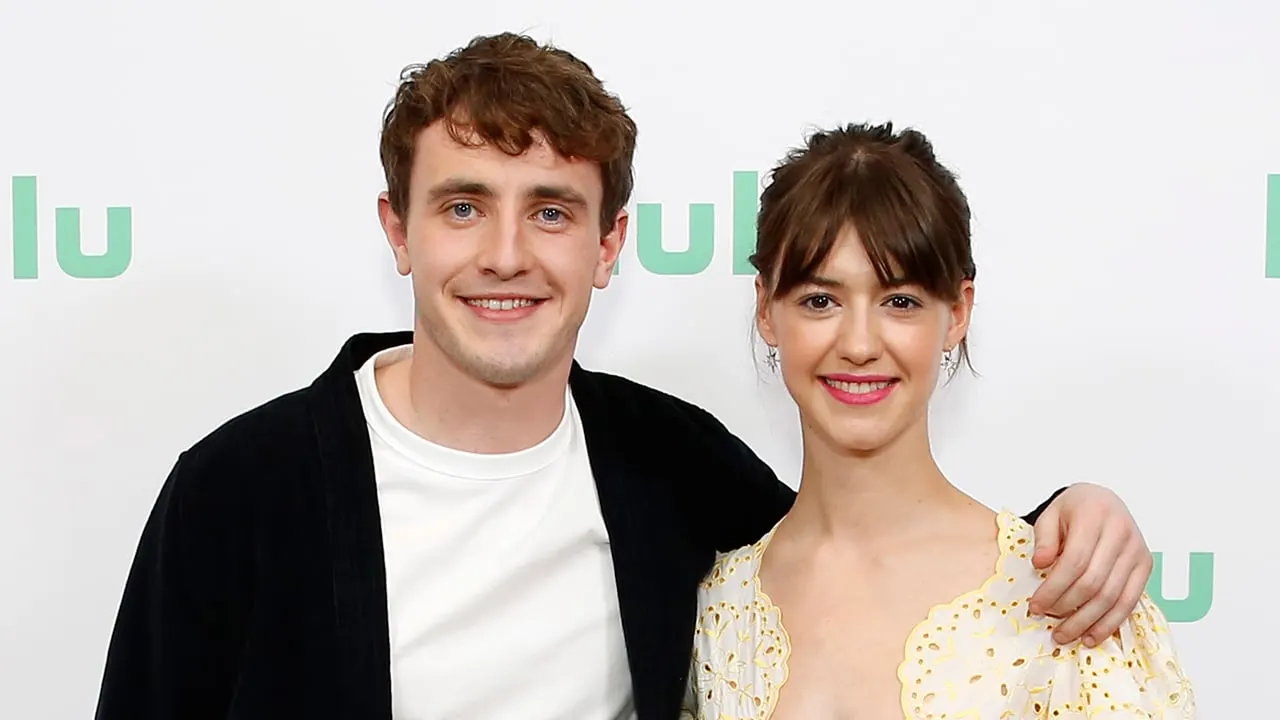
Paul Mescal and Daisy Edgar-Jones, the actors whose performances in Normal People made them household names, have lent their voices to a growing cultural dispute over freedom of expression in the United Kingdom — one that places their breakthrough project's author at its center. The two have signed an open letter defending Sally Rooney after her publisher, Faber & Faber, announced it would cease supplying her books to UK retailers amid complications arising from British counterterrorism law.
The Letter and Its Signatories
Published in The New Statesman on Wednesday, October 21, the letter opens with a pointed declaration — "Sally Rooney is a writer, not a terrorist. Her books must be available to the public" — and calls on the UK government to revisit the legislation at the heart of the situation. The signatories frame the publisher's decision as a de facto act of censorship, even if it falls short of an official government ban. Beyond Mescal and Edgar-Jones, the letter carries the names of Normal People director Lenny Abrahamson and Conversations with Friends actress Alison Oliver, extending the show's creative family into the dispute. The roster of supporters also includes Tilda Swinton, Jessie Buckley, Susan Sarandon, Sharon Horgan, Kate Nash, Irish rap collective Kneecap, musician CMAT, and authors Zadie Smith and Arundhati Roy — a broad coalition spanning literature, film, and music, according to Just Jared.
What Triggered the Controversy
The circumstances trace back to Rooney's public declaration of support for Palestine Action, a pro-Palestinian direct-action group that the UK government formally designated a terrorist organization in July 2025. Rooney had stated her intention to direct earnings from her books and television adaptations — including Normal People — toward the group. That position created an untenable legal situation for Faber & Faber: British counterterrorism legislation effectively barred the publisher from channeling her royalties to her without risking criminal liability. On October 14, Faber announced it would stop supplying her books in the UK, a decision made, the company noted, with Rooney's own agreement. The publisher was clear that it continues to regard her work with pride and will maintain distribution in all other territories.
It is worth emphasizing a distinction that has sometimes been lost in coverage: Rooney's books have not been formally banned in the United Kingdom. Existing copies held by retailers remain on sale, and consumers can still purchase them through whatever stock remains. What has changed is that booksellers cannot replenish their inventory from Faber, meaning the books will quietly disappear from shelves over time — a slow erasure that the letter's signatories argue is no less chilling for its incremental nature.
Mescal and Edgar-Jones: Stakes Beyond the Screen
For Mescal and Edgar-Jones specifically, the act of signing carries a resonance that goes beyond general solidarity. Normal People was the project that introduced both of them to international audiences, and Rooney's prose — her precise rendering of class, desire, and communication between young people — was the raw material from which their careers were substantially built. That Mescal, an actor who has since navigated a remarkably varied path from Aftersun to Gladiator II, would return to that originating relationship and put his name publicly on the line speaks to the depth of that connection. His recent public life has drawn considerable attention beyond his film work, but his participation here is a reminder that his roots remain firmly planted in the literary and independent-film world from which he emerged.
What Comes Next
The open letter stops short of outlining specific remedies beyond urging legislative reform, but its cultural weight is considerable. When figures of the stature of Tilda Swinton and Zadie Smith attach their names to a cause, the conversation tends to expand well beyond its immediate occasion. Whether the UK government will revisit the counterterrorism provisions that created this impasse remains to be seen, but the publishing world — and the film community adjacent to it — has now made its position unmistakably clear. For Sally Rooney, the solidarity may offer limited practical relief, but the message is unambiguous: the people whose careers her work helped shape are not willing to let her disappear quietly from British shelves.
Related on Ni4o: Paul Mescal's Songwriting Side Surfaces on Gracie Abrams' New Album · Paul Mescal and Gracie Abrams: How a Slow-Burn Romance Unfolded
 ProfilePaul MescalActor
Related
Randy Quaid Slams Anne Hathaway Casting in Days of Thunder Sequel
Randy Quaid, who appeared in the original 1990 film, took to X to demand Nicole Kidman's return and dismiss the Hathaway announcement.

Eva Mendes' 'de Gosling' Tattoo Is the Only One She's Ever Wanted
Eva Mendes is showing off her wrist tattoo again — a small but meaningful piece of ink that carries a deep cultural significance.
Steven Spielberg's 'War of the Worlds' Returns to Streaming Amid Debate
Steven Spielberg's 'War of the Worlds' is hitting HBO Max next month, reigniting discussions on its mixed reception.