Paul Bettany on Why Wanda Stayed on the Sidelines in VisionQuest

Paul Bettany reveals there were serious discussions about giving Elizabeth Olsen a larger role in VisionQuest before Kevin Feige advised restraint.
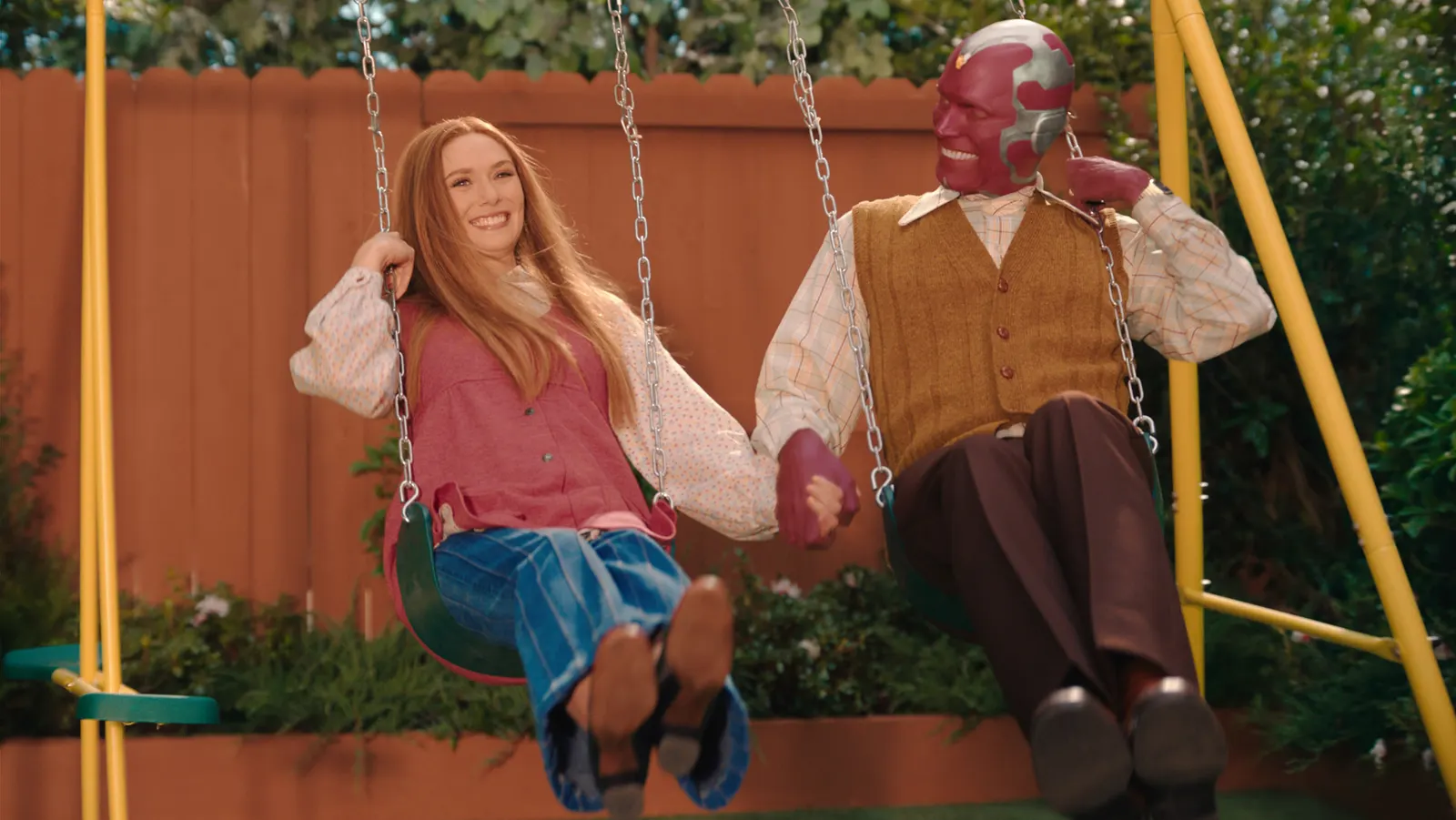
The question of how much connective tissue a spinoff series owes to its parent property is one of the more persistent creative tensions in franchise television. With VisionQuest, Disney+'s MCU series built around Paul Bettany's resurrected synthezoid, that tension took a very specific form — namely, how much of Elizabeth Olsen's Wanda Maximoff should audiences actually get to see.
The Conversation Behind the Decision
Bettany, who both starred in and executive produced VisionQuest, recently shed light on how that question was resolved, speaking according to Deadline. The actor confirmed that there were genuine deliberations about expanding Olsen's presence beyond the brief appearance she ultimately makes in the show's post-credits scene. The debate, as Bettany describes it, wasn't simply logistical — it was fundamentally about what kind of story the series was trying to tell.
"There were questions about it, whether that should happen, whether it opened up too much for the MCU, whether they wanted to do it later," Bettany explained. He recalled a pivotal exchange with Marvel Studios president Kevin Feige, in which Feige argued that a more substantial Wanda storyline would undercut the series' emotional independence. Feige's reasoning, as Bettany recounted it, was direct: the work he and showrunner Terry Matalas had done to make audiences invest in Vision on his own terms was strong enough to carry the show without leaning on the gravitational pull of WandaVision. Bring Wanda back in full, and the whole enterprise risks becoming a sequel to something else rather than a story complete in itself.
"I think he was right," Bettany concluded.
A Lesson in Franchise Restraint
It's a rare and somewhat counterintuitive call in an era when franchise storytelling tends to reward the more-is-more philosophy. The instinct at the studio level is typically to give audiences the reunion they're anticipating, to service the broader universe even at the cost of the individual narrative. What Feige and Bettany landed on instead is closer to the approach that defined some of the more critically durable chapters of prestige television — the idea that restraint, properly deployed, generates more emotional weight than spectacle.
For Olsen herself, whose Scarlet Witch appearance in the VisionQuest finale nonetheless generated significant fan response, the limited role represents an intriguing placeholder. The character's fate following Doctor Strange in the Multiverse of Madness left considerable narrative room, and the decision to withhold a full return suggests Marvel is deliberately keeping that space open.
What This Means for Wanda's MCU Future
Read a certain way, the restraint exercised in VisionQuest is less about closure than about strategic patience. By not resolving the Wanda question within this series, Marvel preserves optionality — the character can be reintroduced at a moment and in a context of the studio's choosing, rather than as a subordinate element of Vision's story. It's a form of narrative asset management that the studio has grown increasingly sophisticated about deploying.
Olsen has had a notably full personal year alongside her professional one. The actress, who welcomed a child with husband Robbie Arnett earlier this year, has been seen out and about in Los Angeles in the months since, suggesting that whatever the MCU's timeline for her return, she's navigating the balance between franchise commitments and a considerably changed home life.
For now, VisionQuest stands as a case study in the kind of creative discipline that's genuinely difficult to maintain when intellectual property and fan expectation create pressure in the opposite direction. That Bettany and Feige had the conversation at all — and landed where they did — speaks to a seriousness of purpose that the finished series appears to reflect.
 ProfileElizabeth OlsenActress
Related
Randy Quaid Slams Anne Hathaway Casting in Days of Thunder Sequel
Randy Quaid, who appeared in the original 1990 film, took to X to demand Nicole Kidman's return and dismiss the Hathaway announcement.
Eva Mendes' 'de Gosling' Tattoo Is the Only One She's Ever Wanted
Eva Mendes is showing off her wrist tattoo again — a small but meaningful piece of ink that carries a deep cultural significance.
Steven Spielberg's 'War of the Worlds' Returns to Streaming Amid Debate
Steven Spielberg's 'War of the Worlds' is hitting HBO Max next month, reigniting discussions on its mixed reception.