Masayoshi Son Rejects Musk's Plan for Data Centers in Space

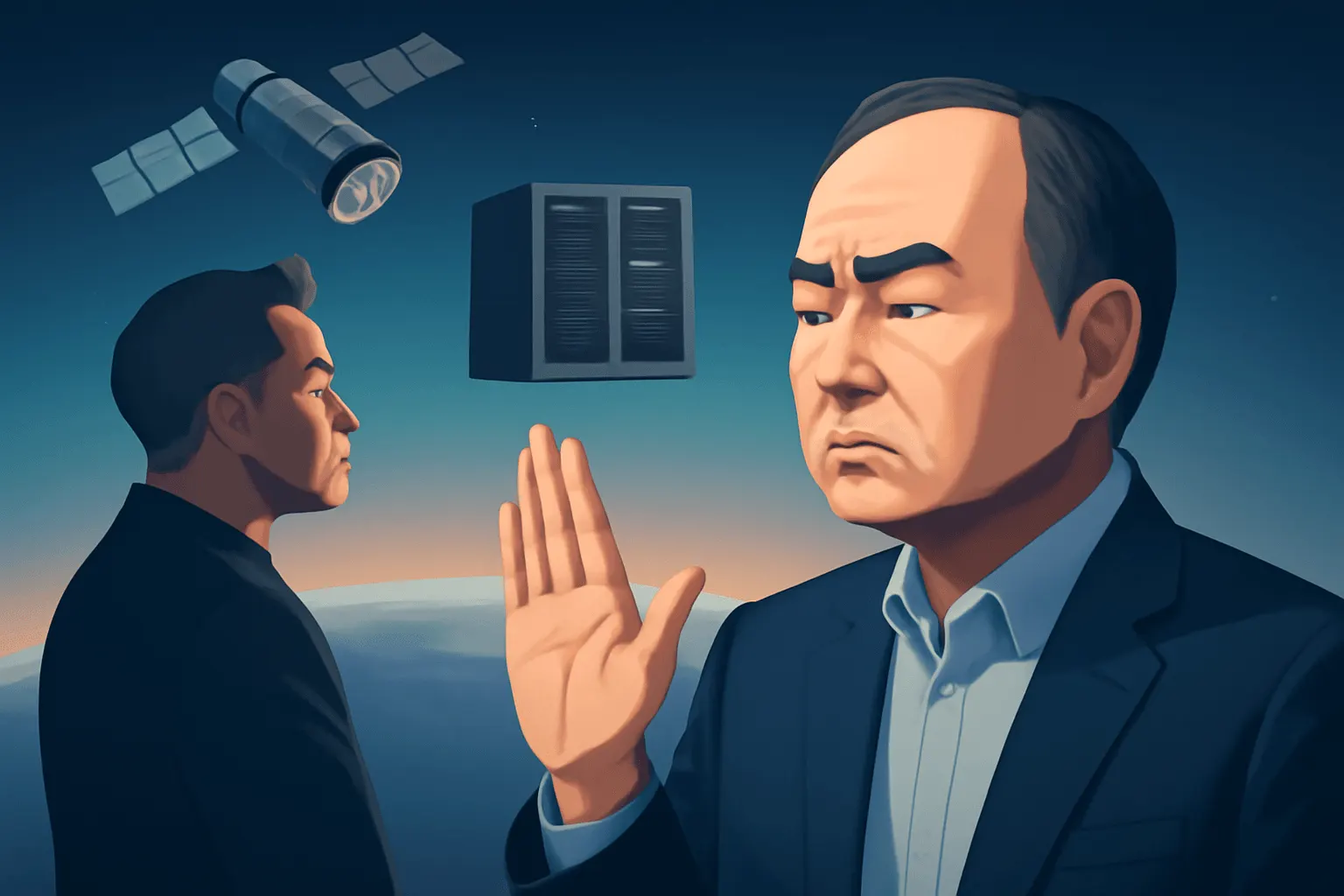
SoftBank's Masayoshi Son waved off Elon Musk's vision of orbital AI data centers, insisting the race will be won by whoever builds computing power on Earth first.
'He Who Strikes First Wins'
Masayoshi Son has little patience for one of Elon Musk's loftier ideas. The SoftBank founder used a recent appearance to pour cold water on the notion of building artificial intelligence data centers in orbit, arguing that the contest for AI supremacy will be settled on the ground, and settled soon. His remarks were reported by Fortune on June 25, 2026.
"In the battle for AI, the next few years will be far more important than what might happen a decade or so from now," Son said, before distilling his philosophy into a single line: "He who strikes first wins." The takeaway, in his telling, is that the ability to bring computing capacity online quickly matters far more than speculative megaprojects floating above the atmosphere.
The Practical Case Against Orbit
Son's skepticism, according to Fortune, rests on hard economics rather than a lack of imagination. Putting data centers in space would, he argued, take years to engineer and demand enormous sums to launch and maintain. He also took aim at the central selling point of orbital computing, the promise of cheap, abundant solar power. Electricity, Son noted, is only a small slice of what it actually costs to operate a data center.
The larger expenses lie elsewhere. By his accounting, the dominant line items are hardware and advanced chips, not energy bills, while the practical drawbacks of operating in orbit would quickly erode any savings:
- Communication delays between ground and space would hamper performance.
- Transport and launch costs would add a steep, recurring burden.
- Maintenance and upgrades, routine on Earth, become far harder beyond it.
Framed that way, the appeal of free sunshine looks a lot less compelling against the weight of everything else.
A Bet on Earthbound Infrastructure
The critique doubles as a statement of strategy. Fortune notes that SoftBank is a major backer of Stargate, the roughly $500 billion push to build AI infrastructure across the United States, having committed $19 billion to the effort in January 2025. For Son, that capital is best spent on terrestrial facilities that can be switched on relatively quickly, putting computing power to work while rivals are still drawing up blueprints for the stars.
That posture aligns neatly with his sense of urgency. If the decisive window really is the next few years, then speed of deployment becomes the whole game, and Earth-based construction offers a clearer, faster path to scale than anything that has to clear a launchpad first.
Another Clash Between Titans
The exchange marks the latest friction between two of the technology world's most ambitious investors, who have previously found themselves on opposite sides over Tesla and over Stargate's financing. It is a recurring dynamic: Musk reaching for the audacious, long-horizon vision, and Son casting himself as the pragmatist focused on near-term execution.
Neither man is a stranger to outsized bets, which makes the disagreement less about appetite for risk than about timing and where to place it. Whether orbital data centers ever prove viable is a question for a later decade. For now, according to Fortune, Son is content to let Musk gaze upward while he races to lay the physical foundations of the AI era where, in his view, the contest will truly be decided: on the ground, right now.
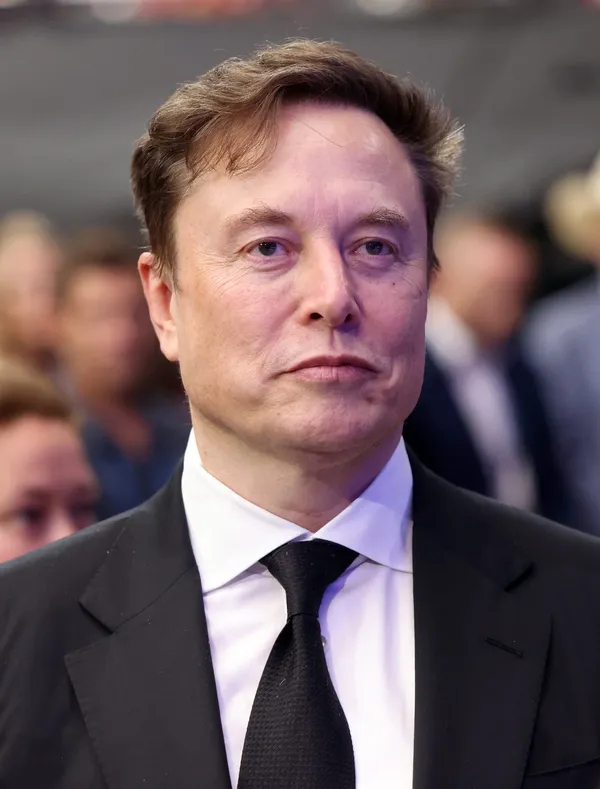 ProfileElon MuskEntrepreneur and business magnate
Related
Jensen Huang's Call from Trump Disrupts Nvidia's All-Hands Meeting
During Nvidia's recent all-hands meeting, CEO Jensen Huang received an unexpected call from Donald Trump, sparking employee buzz about its implications.
Jane Fonda Supports Mark Ruffalo Amid Controversy Over Antisemitism Claims
Jane Fonda stands by Mark Ruffalo after he was labeled antisemitic by Paramount for criticizing Larry Ellison's ties to Israel and a major merger.
Mark Ruffalo Ties Oracle's Military Tech to Paramount Deal, Studio Fires Back
The Hulk actor linked Larry Ellison's Oracle to Israel's military operations, prompting an unusual public response from Paramount calling the remarks antisemitic.