James Cameron's 'The Abyss' Hits Free Streaming Nearly 40 Years On

Cameron's undersea sci-fi thriller 'The Abyss' arrives on Tubi October 1, offering new audiences a chance to rediscover its Lovecraftian depths.
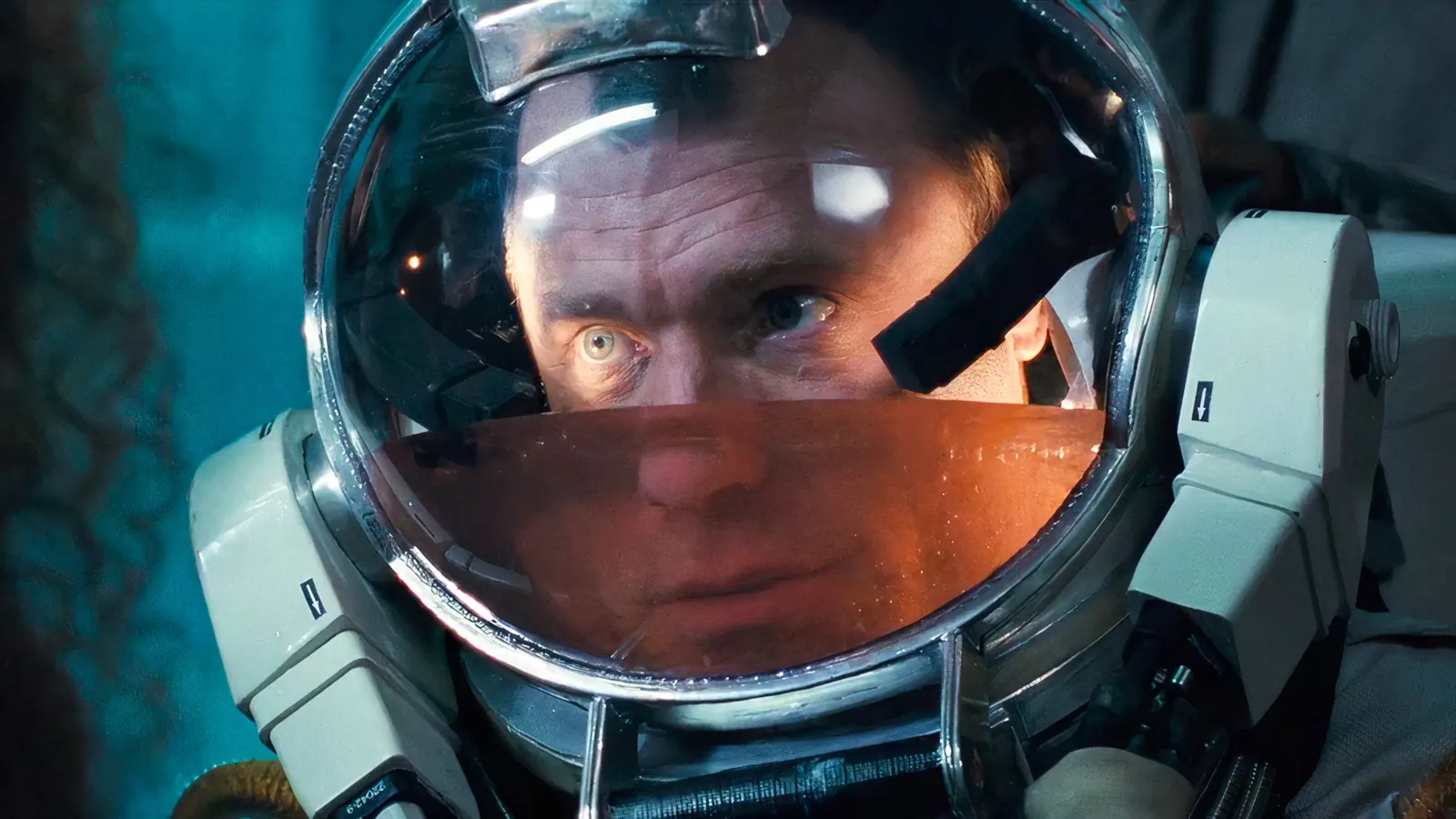
Few filmmakers have returned to the ocean as obsessively as James Cameron, and perhaps no single work in his catalogue captures that fixation more purely than his 1989 deep-sea thriller The Abyss. Now, nearly four decades after its theatrical debut, the film is about to reach a new generation of viewers entirely for free.
A Long-Overdue Rediscovery
According to ScreenRant, The Abyss will begin streaming on Tubi on October 1, making it one of the more significant free-streaming arrivals of the autumn season. For those unwilling to wait, the film is already available on Disney+ and can be rented or purchased on platforms such as Prime Video for as little as $3.99. The timing feels apt — there is a growing critical appetite for reassessing films that were perhaps too ambitious for their moment, and The Abyss fits that description with remarkable precision.
The film follows a civilian deep-sea drilling crew thrust into a covert military operation to recover a sunken nuclear submarine in the Cayman Trough. What begins as a tense underwater procedural gradually reveals itself to be something far stranger and more philosophical, as the crew encounters a form of non-terrestrial intelligence lurking in the ocean's deepest recesses. The ensemble — led by Ed Harris and Mary Elizabeth Mastrantonio, alongside Michael Biehn and a cast that includes William Wisher Jr. — gives the film the grounded, blue-collar credibility that Cameron has always prized in his storytelling.
Where Cameron Meets Lovecraft
The thematic DNA of The Abyss owes a quiet but substantial debt to H.P. Lovecraft, the early 20th-century author whose Cthulhu Mythos established the literary template for cosmic horror rooted in oceanic dread. Lovecraft conceived of vast, unknowable civilisations buried beneath the sea — places like the sunken city of R'lyeh — and populated them with ancient entities whose very existence threatened human sanity. Cameron uses the Cayman Trough as his own version of that gateway, a real-world threshold into a hidden alien world that feels simultaneously plausible and deeply unsettling.
The parallel extends to character psychology. Michael Biehn's portrayal of a Navy SEAL succumbing to high-pressure nervous syndrome is one of the film's most underappreciated achievements — his deteriorating mental state, driven by the physiological reality of extreme depth, mirrors the classic Lovecraftian protagonist whose rational mind fractures under the weight of what it cannot comprehend. The deep ocean, in both Lovecraft's fiction and Cameron's film, is not merely a physical environment but a psychological pressure chamber.
Where the two sensibilities diverge is in their conclusions. Lovecraft was a committed pessimist; his cosmic entities offered humanity no comfort, only the cold revelation of its own insignificance. Cameron, characteristically, cannot resist a more redemptive resolution. The Non-Terrestrial Intelligence in The Abyss ultimately proves benevolent rather than malevolent, and the film closes on a note of connection rather than annihilation. It is, as the thematic throughline suggests, Lovecraftian existentialism tempered by a distinctly Cameronian faith in human resilience — a tension that Cameron himself continues to navigate across his entire body of work.
A Legacy Built on Craft
When The Abyss was released in August 1989, it earned roughly $90 million at the worldwide box office against a production budget estimated between $43 and $47 million — a modest return for a film of such technical scale. Critics were largely positive, and the film holds a 75% score on Rotten Tomatoes, though reviewers noted that its groundbreaking special effects — which earned an Academy Award nomination for Best Visual Effects — occasionally drew attention away from the genuinely claustrophobic tension at the story's core.
That tension is worth revisiting. The Abyss represents Cameron at his most formally daring, pushing practical filmmaking to its physical limits while embedding genuine emotional stakes beneath the spectacle. Its arrival on free streaming is less a footnote than a second chance — for the film, and for audiences willing to descend into its considerable depths.
Related on Ni4o: Remembering William Wisher: Co-Writer of 'Terminator 2' Passes Away at 71
 ProfileJames CameronDirector & producer
Related

Randy Quaid Slams Anne Hathaway Casting in Days of Thunder Sequel
Randy Quaid, who appeared in the original 1990 film, took to X to demand Nicole Kidman's return and dismiss the Hathaway announcement.

Eva Mendes' 'de Gosling' Tattoo Is the Only One She's Ever Wanted
Eva Mendes is showing off her wrist tattoo again — a small but meaningful piece of ink that carries a deep cultural significance.

Steven Spielberg's 'War of the Worlds' Returns to Streaming Amid Debate
Steven Spielberg's 'War of the Worlds' is hitting HBO Max next month, reigniting discussions on its mixed reception.