How Spielberg's Scrapped Alien Horror Film Accidentally Birthed E.T.

A new book reveals how Night Skies, an unproduced alien horror project, quietly gave rise to E.T., Poltergeist, and Gremlins.
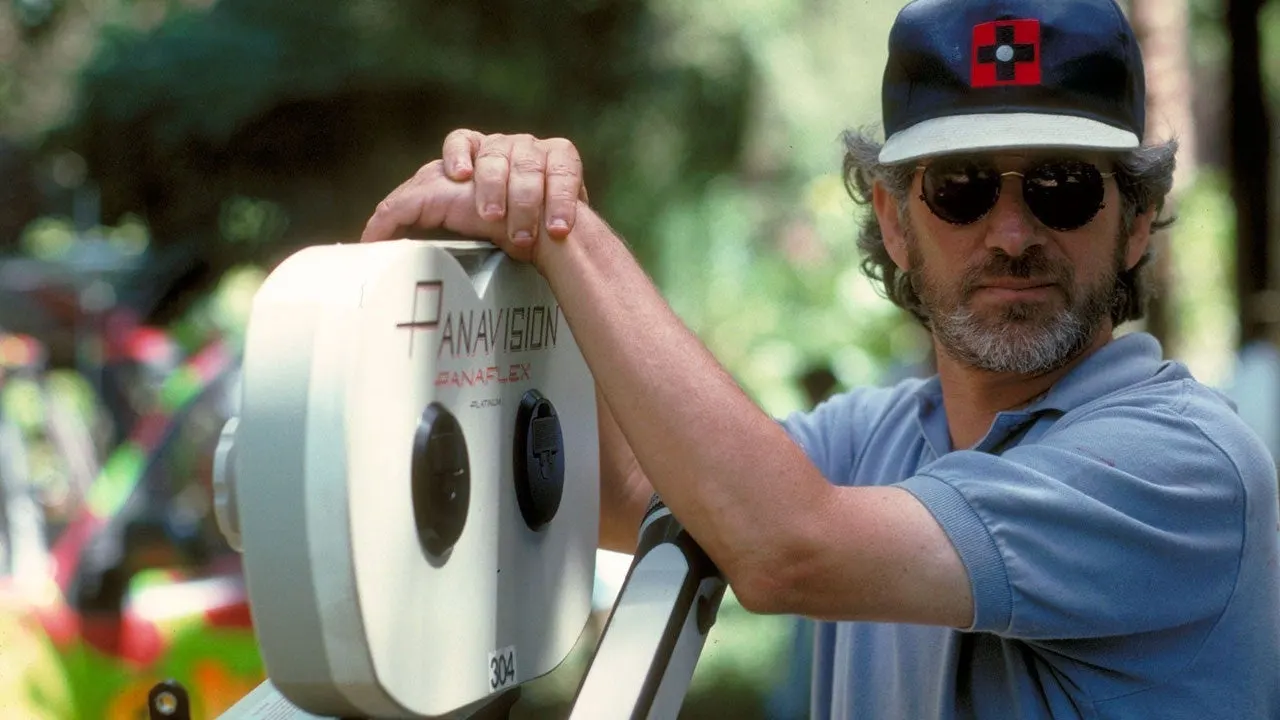
Few filmmakers have reshaped popular cinema through their unmade projects as decisively as Steven Spielberg. A newly released book by film journalist and author Max Evry, Stranded on Earth: How Night Skies Became E.T. the Extra-Terrestrial, offers a detailed account of how a scrapped alien horror concept from the late 1970s and early 1980s set off a chain reaction that produced some of Hollywood's most beloved genre films.
The Ambitions Behind Night Skies
According to IGN, the project known as Night Skies was conceived as a dark, frightening counterpart to the wonder-filled Close Encounters of the Third Kind (1977). Spielberg was attached as producer, John Sayles had written the script, production illustrator Ron Cobb was being groomed for his directorial debut, and Rick Baker — one of the great practical-effects artists in cinema history — was designing the creatures. Kathleen Kennedy, then working under Spielberg and years away from becoming one of the industry's most powerful producers, was also part of the team. The premise centered on malevolent or mischievous aliens terrorizing a rural family, a premise with genuine menace quite unlike the gentle extraterrestrial encounter Spielberg would eventually deliver.
Evry estimates that close to a million dollars was spent developing the project, and he is careful to note that it was never an idle sketch. Night Skies was substantively developed — storyboarded, scripted, and staffed — before circumstances began pulling it apart.
The Shadow of 1941 and Studio Distrust
To understand why Night Skies unraveled, one has to reckon with the turbulent production of 1941 (1979), Spielberg's sprawling World War II comedy that proved enormously costly and critically bruising. The film, as Evry describes it, was an emblem of a filmmaker who had momentarily lost his editorial discipline, and it damaged Spielberg's standing with the studios in ways that would echo through the development of his subsequent projects. Even as Night Skies evolved into what would become E.T. the Extra-Terrestrial, studio confidence in Spielberg remained fragile. Columbia passed on the project entirely; Universal agreed to move forward only if financing was secured through a bond company rather than directly through the studio. It was, as Evry frames it, the last period in which the industry genuinely questioned whether Spielberg could be trusted.
This context is crucial for understanding why a filmmaker so closely associated with a singular command of blockbuster filmmaking had to fight for the resources to make what would become one of the highest-grossing films ever produced.
How E.T., Poltergeist, and Gremlins Emerged from the Same Moment
One of Evry's most revealing findings is how interconnected these productions were. When Ron Cobb became unavailable — he was locked into production design work on Conan the Barbarian in Spain — Spielberg reportedly reached out to Tobe Hooper. Hooper declined the alien project but expressed interest in making a ghost story, and that conversation helped give shape to Poltergeist (1982). Meanwhile, the DNA of Night Skies was also filtering into another developing project: a Spielberg-produced film about small, chaotic creatures that would eventually become Gremlins. These films were not sequential — they were essentially parallel, all orbiting the same creative ferment.
E.T. itself emerged from a blending of Night Skies with After School, a script developed by Robert Zemeckis and Bob Gale for Spielberg. Elements from both projects were synthesized into the finished film, which explains why E.T. carries traces of both suburban unease and something more threatening beneath its warmth.
Aliens as a Directorial Instrument
Evry draws a sharp analogy in his book: Spielberg's relationship to alien narratives mirrors the way Martin Scorsese has repeatedly returned to the gangster genre — not out of fixed ideology but as a flexible vessel for different emotional and thematic concerns. From the teenage sci-fi epic Firelight, shot for $500 and given a single-night theatrical run in Spielberg's hometown (later recreated in The Fabelmans), through Close Encounters, E.T., and beyond, the extraterrestrial has functioned as a kind of directorial instrument. As someone who has continued to shape Hollywood's relationship with ambitious, expensive storytelling, Spielberg's willingness to let one concept dissolve into several better ones says as much about his creative instincts as any single finished film.
 ProfileSteven SpielbergDirector & producer
Related

Randy Quaid Slams Anne Hathaway Casting in Days of Thunder Sequel
Randy Quaid, who appeared in the original 1990 film, took to X to demand Nicole Kidman's return and dismiss the Hathaway announcement.

Eva Mendes' 'de Gosling' Tattoo Is the Only One She's Ever Wanted
Eva Mendes is showing off her wrist tattoo again — a small but meaningful piece of ink that carries a deep cultural significance.
Steven Spielberg's 'War of the Worlds' Returns to Streaming Amid Debate
Steven Spielberg's 'War of the Worlds' is hitting HBO Max next month, reigniting discussions on its mixed reception.