How Emma Stone's Behind-the-Scenes Role Shaped 'You Can See Everything'

Emma Stone's off-screen contribution to Nathan Fielder's Elizabeth Holmes documentary proved pivotal — connecting the filmmakers with Amanda Seyfried.
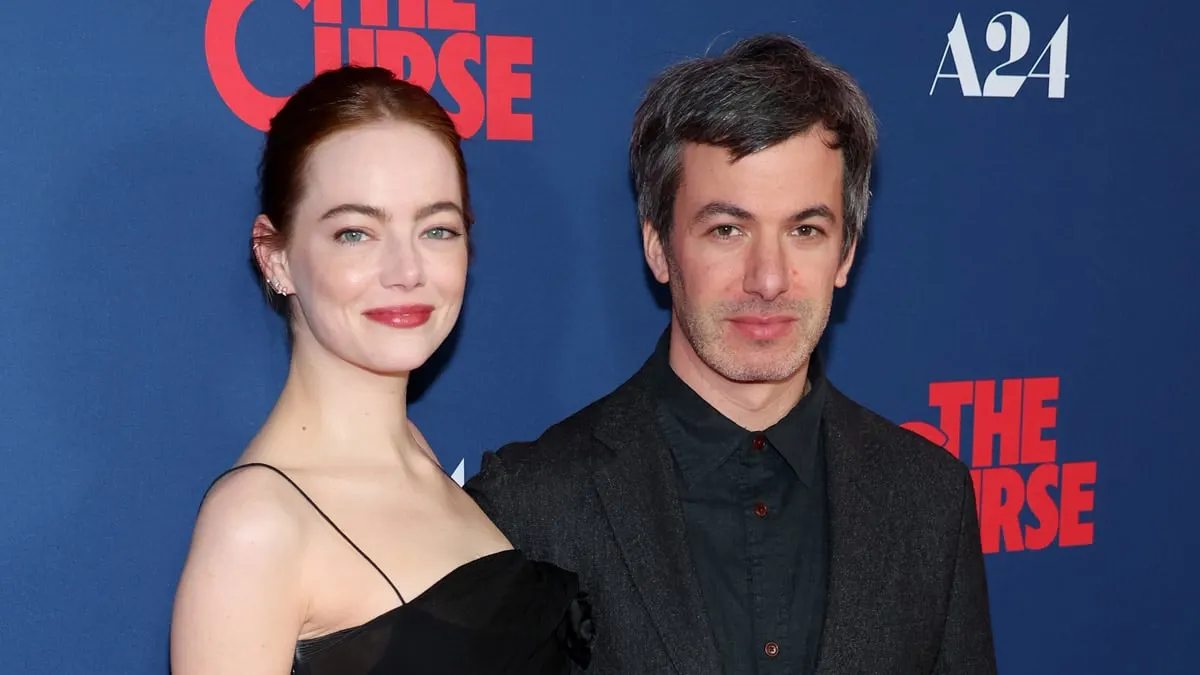
The credit roll at the end of a film is one of cinema's most honest documents, cataloguing the labour — seen and unseen — that brings a project to life. In the case of Nathan Fielder and Lance Oppenheim's documentary You Can See Everything, a "special thanks" to Emma Stone turns out to carry rather more weight than the typical courtesy acknowledgment, according to Just Jared.
The Connection That Changed Everything
Fielder had already completed the first half of his Elizabeth Holmes documentary by the time he and co-creator Benny Safdie were promoting their Showtime series The Curse in late 2023 — the same satirical black-comedy thriller that earned Stone a Golden Globe nomination for her performance. During that period, Stone — a close friend of Fielder's forged through their collaboration on The Curse — learned about the documentary and the filmmakers' difficulty securing on-camera participation from anyone in Holmes's immediate orbit.
Stone's intervention was quiet but decisive. Co-director Lance Oppenheim confirmed in a new interview with Vulture that it was Stone who reached out to Amanda Seyfried on the filmmakers' behalf, bridging two worlds: the documentary's unresolved structural problem and an actress who had already spent considerable time inhabiting the Theranos founder's psychology for Hulu's The Dropout.
Amanda Seyfried's Role — and Her Nerves
Seyfried, by her own admission, got on the initial Zoom call with Fielder and Oppenheim as something of a fan, and was apparently anxious enough about the meeting to wonder whether she was being set up. That initial wariness gave way to a collaboration that became the documentary's central dramatic architecture. Viewers who have seen the film will recognise just how much Seyfried's involvement reshapes its final act: she reviews footage gathered at Holmes's home, eventually attends a meeting with Holmes's partner Billy Evans, participates in a phone call with Holmes herself, and steps into reenactments — drawn from Fielder's own memory — to embody scenes that were never captured on film.
It is a formally audacious structure, the kind of layered reality-play that recalls the work of Errol Morris or the late-career experiments of Joshua Oppenheimer, and it would not exist in its current form without the introduction Stone quietly facilitated.
Awards Positioning and What's at Stake
With A24 now running an awards campaign around the film, the contours of that campaign reflect just how central Seyfried's contribution is considered to be. Variety has reported that A24's push will place Seyfried's performance at its core for acting categories. Christopher Abbott, who portrays Billy Evans in the reenactments, is being positioned for Best Supporting Actor consideration. Whether Fielder himself qualifies for a Best Actor submission remains an open question given the film's hybrid documentary-narrative form.
Beyond the acting categories, A24 is pursuing recognition in eight additional areas: Best Director, Best Cinematography, Best Costume Design, Best Film Editing, Best Makeup & Hairstyling, Best Production Design, Best Original Score, and Best Sound — a breadth of campaigning that signals the studio's confidence in the film as a genuine awards contender across disciplines.
Stone's Expanding Role Behind the Camera
For Stone, the "special thanks" credit is a small but telling footnote to a career that has increasingly seen her gravitating toward unconventional, craft-forward projects. Her willingness to serve as an informal connector — essentially a human bridge between Fielder's documentary ambitions and Seyfried's world — speaks to the kind of collaborative intelligence that tends to define actors whose interests extend well beyond their own screen time. Fans tracking her current work will know she is also deep in production on other projects; she was recently spotted filming The Catch with Tim Robbins in Brooklyn, a baseball romantic comedy that has also added comedian Druski to its cast.
In the broader sweep of Stone's career — a career whose early ambitions are illuminated by details like her long-ago audition for The O.C. — this behind-the-scenes moment on You Can See Everything may be modest in scale, but it is entirely consistent with an artist who understands that the best films are almost always collaborative acts of trust.
 ProfileEmma StoneAcademy Award-winning actress
Related
Randy Quaid Slams Anne Hathaway Casting in Days of Thunder Sequel
Randy Quaid, who appeared in the original 1990 film, took to X to demand Nicole Kidman's return and dismiss the Hathaway announcement.

Eva Mendes' 'de Gosling' Tattoo Is the Only One She's Ever Wanted
Eva Mendes is showing off her wrist tattoo again — a small but meaningful piece of ink that carries a deep cultural significance.
Steven Spielberg's 'War of the Worlds' Returns to Streaming Amid Debate
Steven Spielberg's 'War of the Worlds' is hitting HBO Max next month, reigniting discussions on its mixed reception.