How Ebenezer Rewrites Scrooge's Redemption Arc in Key Ways

Johnny Depp's supernatural Dickens reimagining takes Scrooge's transformation further than any previous adaptation, with meaningful structural departures.
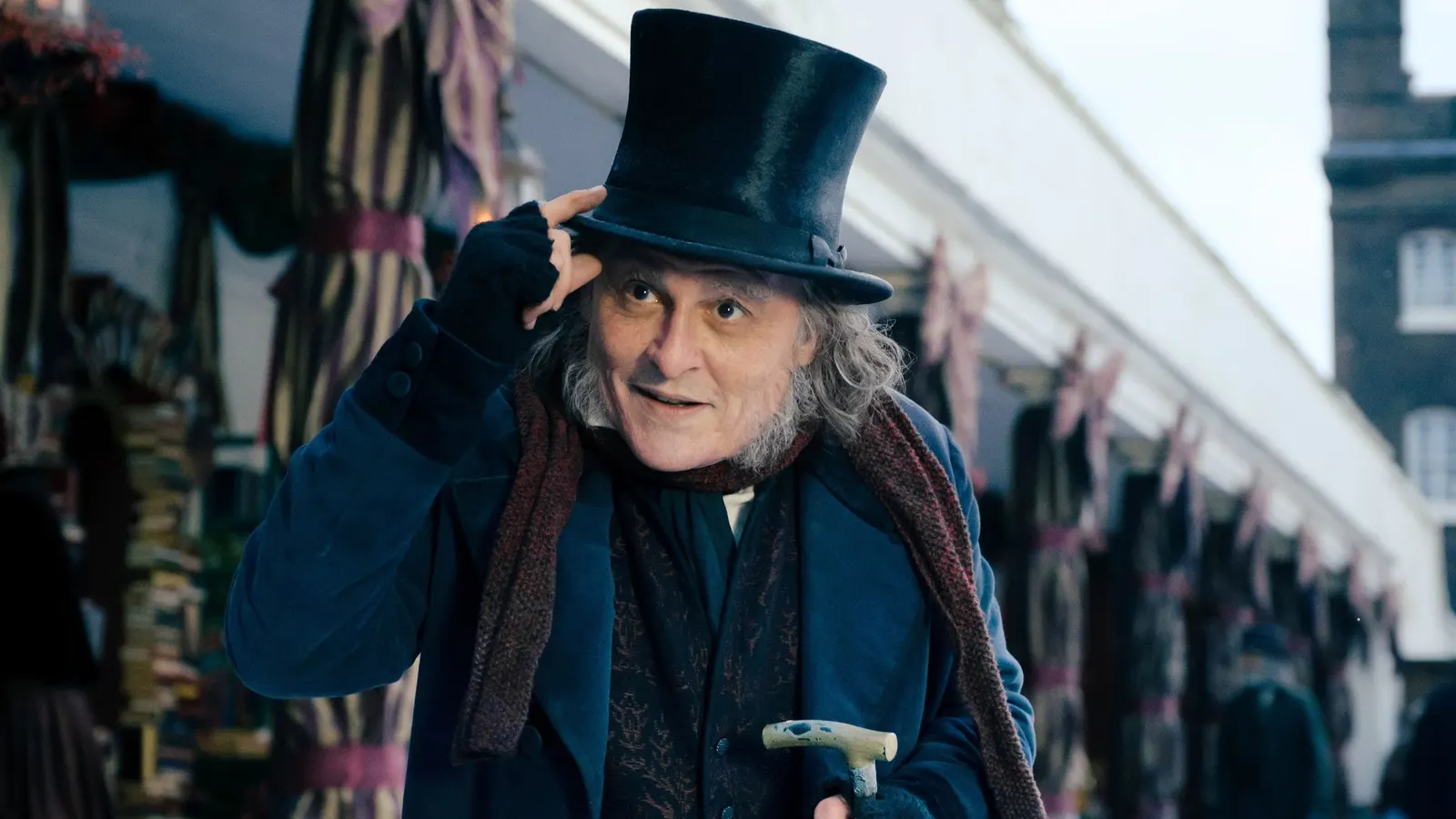
Ti West's Ebenezer arrives as one of the more ambitious reframings of Charles Dickens' A Christmas Carol in recent memory — not simply retelling a familiar story, but interrogating what redemption genuinely requires of a man defined by greed and emotional withdrawal. With Johnny Depp inhabiting the title role, the film has already drawn considerable attention for its tonal blend of the haunting and the darkly comic, and its ending proves just as distinctive as its marketing suggested.
A Redemption With Real Structural Weight
Where most adaptations of Dickens' novella are content to close on Scrooge awakening with renewed warmth — buying turkeys, raising salaries, laughing at windows — Ebenezer pushes its protagonist into more demanding territory. Rather than allowing generosity to function as a kind of emotional absolution, the film insists that Scrooge take concrete, structural action to undo the harm his miserliness has caused. According to ScreenRant, the film's most striking departure from the source material is Scrooge's decision to offer Bob Cratchit not merely a wage increase but a full business partnership — renaming their enterprise Scrooge and Cratchit and effectively elevating a man he once exploited to the status of an equal.
This is a genuinely interesting creative choice. In Dickens' original, the promise of a salary raise reads as benevolent paternalism — the wealthy employer condescending to be less cruel. West's film reframes that gesture entirely: Scrooge doesn't simply choose to be kinder within an unchanged power structure, he dismantles the structure itself. The sign above the door becomes the film's most eloquent image.
The Marley Mirror
The weight of that decision is sharpened considerably by the film's opening flashback to Jacob Marley, who is established as the architect of the business's callous culture. Marley openly belittles Cratchit, treats workers as instruments of profit, and dies attended by no one but Scrooge himself. His subsequent appearance as a chain-bound specter — condemned by the selfishness of the life he chose — functions as a negative template against which Scrooge's transformation is measured.
By offering Cratchit a partnership, Scrooge is essentially doing the inverse of what Marley represented. The film draws a clear line from Marley's ghost to Scrooge's boardroom decision, suggesting that authentic change must manifest in the same domain where the harm was done: commerce, labor, and the distribution of opportunity.
Divergences From Dickens That Reshape the Emotional Core
The film also redistributes emotional weight in ways that feel deliberately considered. The turkey — in Dickens famously dispatched to the Cratchit household — goes instead to Scrooge's nephew Fred and Fred's wife Clara. The shift is significant: Ebenezer places Fred at the center of Scrooge's relational reckoning, revealing that the nephew's persistent cheerfulness has been painful for Scrooge because it recalls his late sister. That psychological specificity gives the reconciliation scene a texture most adaptations never bother with.
Meanwhile, Scrooge's gesture toward Belle, his former fiancée, is handled with quiet restraint. Having learned she has forged a successful writing career, he purchases her novel and leaves an unsigned congratulatory letter inside — a note that asks nothing in return and offers only recognition. It is perhaps the film's most emotionally mature beat.
Depp and the Weight of the Role
For Depp, Ebenezer represents a carefully chosen vehicle for his ongoing return to leading-man status. Scrooge is a character with centuries of interpretive history behind him, from Alastair Sim's definitive 1951 portrayal to Bill Murray's postmodern riff in Scrooged, and inhabiting him requires the actor to work within a deeply familiar framework while finding something new to say. The structural inventions West and his collaborators have layered into the ending suggest they were serious about giving Depp something worth playing — a Scrooge whose transformation is measured not in sentiment alone, but in the reordering of power.
Whether the film fully earns those ambitions across its runtime remains to be seen, but its climax at least demonstrates that Ebenezer is engaged with Dickens on a level beyond simple nostalgia.
Related on Ni4o: Johnny Depp's Return to the Big Screen: What Lies Ahead
 ProfileJohnny DeppActor and Musician
Related
Randy Quaid Slams Anne Hathaway Casting in Days of Thunder Sequel
Randy Quaid, who appeared in the original 1990 film, took to X to demand Nicole Kidman's return and dismiss the Hathaway announcement.

Eva Mendes' 'de Gosling' Tattoo Is the Only One She's Ever Wanted
Eva Mendes is showing off her wrist tattoo again — a small but meaningful piece of ink that carries a deep cultural significance.
Steven Spielberg's 'War of the Worlds' Returns to Streaming Amid Debate
Steven Spielberg's 'War of the Worlds' is hitting HBO Max next month, reigniting discussions on its mixed reception.