Guillermo del Toro Confirms He Once Pursued a BioShock Film — Then Ran

The Oscar-winning director has finally acknowledged his ill-fated attempt to bring the iconic underwater game to the big screen.
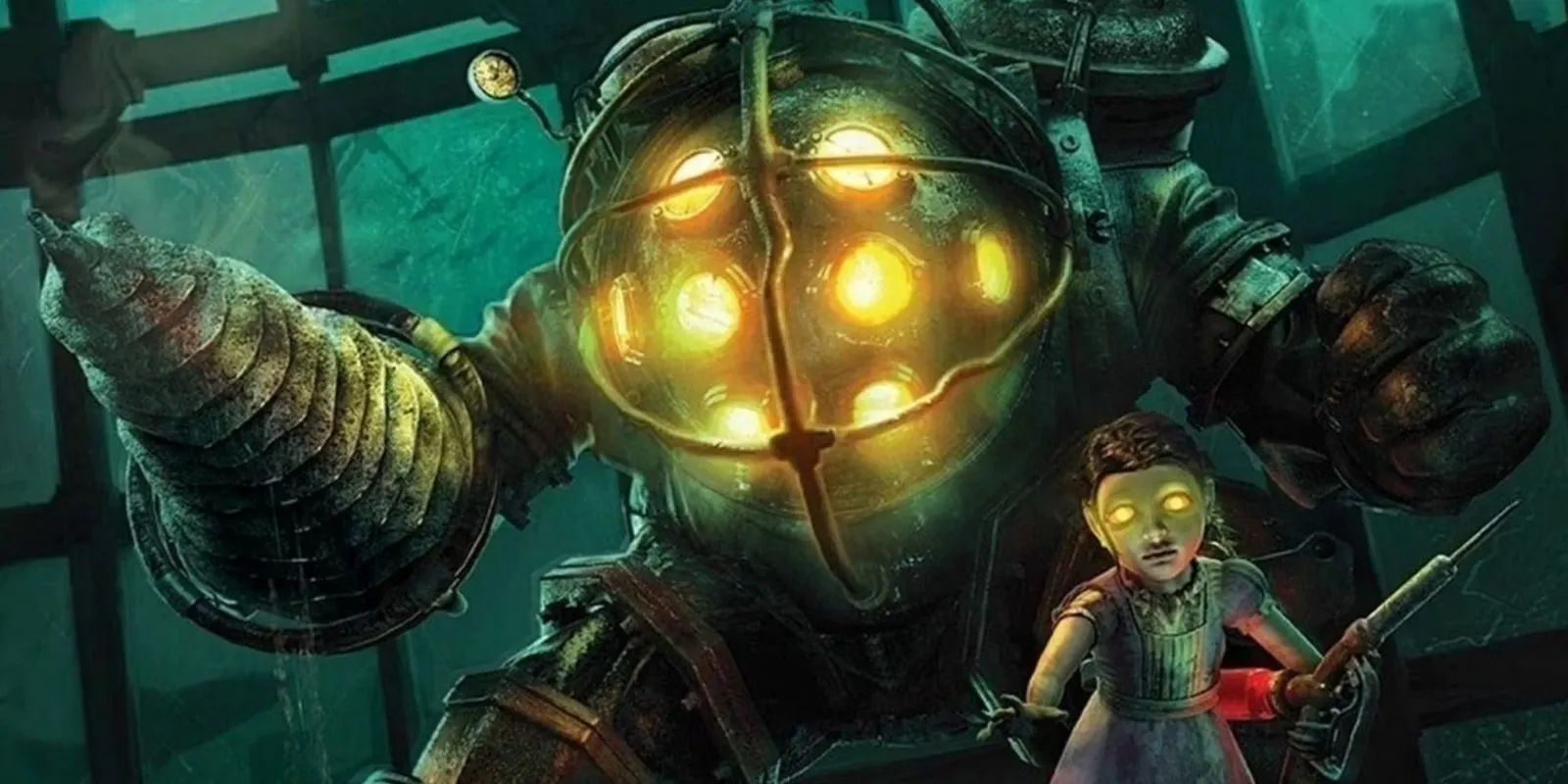
Few filmmakers seem better suited on paper to adapt BioShock's singular blend of Art Deco grandeur, Randian philosophy, and body-horror grotesquerie than Guillermo del Toro — a director whose entire career has been built on rendering the fantastical with architectural precision and genuine emotional weight. Yet according to the director himself, that apparent compatibility dissolved almost immediately upon contact with reality, leaving behind what he describes as some of the worst phone calls of his professional life.
A Rumor Finally Put to Rest
For years, whispers circulated within industry circles that del Toro had at some point explored the possibility of a BioShock adaptation, but the director had never formally addressed the speculation. That changed in a recent conversation with IGN, reported by Collider, in which del Toro not only confirmed the discussions took place but dispatched any lingering hope with characteristic directness. "We had a couple of calls," he said. "They are probably one of the most disastrous calls I've ever had. So no, f*ck no." He declined to identify the parties involved or elaborate on the precise nature of the breakdown, leaving the specific wreckage to the imagination.
Del Toro, whose commitment to practical craft and artistic integrity has defined projects from Pan's Labyrinth to The Shape of Water, is no stranger to ambitious projects that collapse under the weight of creative or commercial friction — his long-gestating passion projects are almost a genre unto themselves. What makes this particular admission noteworthy is less the failure itself and more the reasoning he offered for it.
The Medium-Specificity Problem
Del Toro's central argument cuts to a fundamental tension that has plagued game adaptations for decades: the mechanics that make a video game compelling are not the same mechanisms that make a film emotionally resonant. "The dynamics of a video game are very different than a movie," he explained. "The storytelling is very different, because you're not solving puzzles. You're not assembling." This is a more sophisticated critique than the usual hand-waving about source-material fidelity. Del Toro is pointing toward something structural — the way BioShock, in particular, distributes narrative meaning across environmental exploration, player agency, and mechanical discovery in ways that simply have no direct cinematic equivalent.
Rapture, the game's decaying undersea metropolis, is a world designed to be interrogated by a player moving through it at their own pace, piecing together Andrew Ryan's catastrophic social experiment through audio diaries and architectural details. Translating that layered, participatory storytelling into a linear, two-hour experience requires more than clever screenwriting — it requires a fundamental reconception of how the story is told. Del Toro, to his credit, recognized that mismatch early and apparently decided, wisely, that he was not the right instrument for the job. Fans of his broader collaborative universe can follow related developments through his ongoing creative endeavors.
Rapture Still Has a Champion
The BioShock adaptation is not dead — merely delayed and in different hands. Netflix announced its own take on the property back in 2022, with Francis Lawrence, whose work on The Hunger Games: Catching Fire demonstrated a facility for adapting richly world-built source material, attached to direct. Michael Green, whose screenplay for Blade Runner 2049 showed a similar aptitude for expanding cinematic universes with thematic care, is handling the script. Producer Roy Lee has acknowledged that Lawrence's other professional commitments have been the primary obstacle keeping the project from moving forward, and no release date has been set.
It is worth noting that del Toro's longtime collaborator Ron Perlman continues to navigate an active career of his own, suggesting the broader creative ecosystem around the director remains vibrant even as specific projects fall away. Del Toro himself seems entirely unburdened by his exit from Rapture, content to let the Netflix team wrestle with Andrew Ryan's waterlogged legacy while he pursues work more naturally suited to his sensibilities. Sometimes the most revealing creative decision a filmmaker makes is knowing precisely when to walk away.
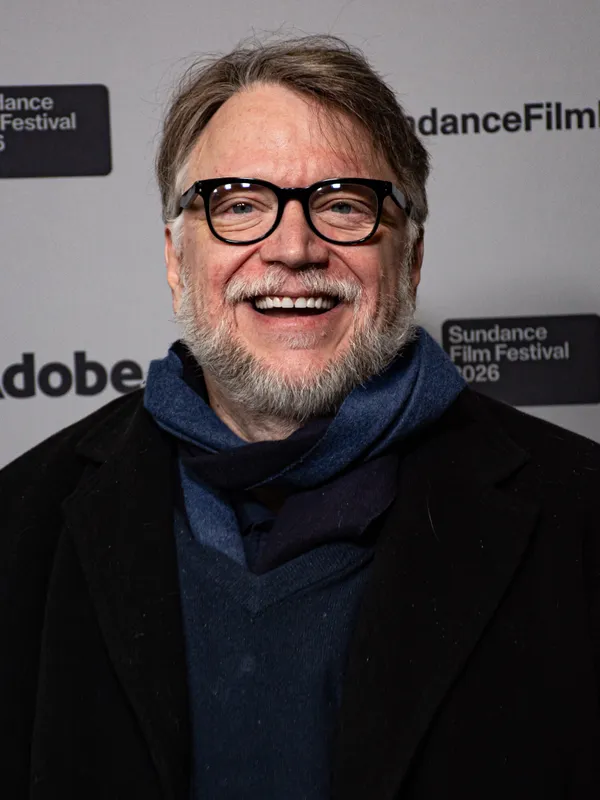 ProfileGuillermo del ToroFilmmaker
Related
Randy Quaid Slams Anne Hathaway Casting in Days of Thunder Sequel
Randy Quaid, who appeared in the original 1990 film, took to X to demand Nicole Kidman's return and dismiss the Hathaway announcement.

Eva Mendes' 'de Gosling' Tattoo Is the Only One She's Ever Wanted
Eva Mendes is showing off her wrist tattoo again — a small but meaningful piece of ink that carries a deep cultural significance.
Steven Spielberg's 'War of the Worlds' Returns to Streaming Amid Debate
Steven Spielberg's 'War of the Worlds' is hitting HBO Max next month, reigniting discussions on its mixed reception.